

Homepage Experiences
Transforming static storefronts into adaptive, trip-aware travel gateways across 390M annual visits
Opportunity
The homepages for Expedia, Hotels.com, and Vrbo drew 32.5 million monthly visits across web and app, driving more than half of all new customer acquisition on web. Despite this volume, they functioned as static storefronts dominated by a search box, generic feeds, and low-engagement promos. The experience treated all three brands almost identically, ignored whether a traveller was casually exploring or actively mid-trip, and was constantly disrupted by competing internal asks. The opportunity was to shift away from a one-size-fits-all landing page and build an adaptive experience grounded in traveller intent and brand differentiation.
Approach
I partnered with Product and Engineering leadership to define a multi-brand strategy, phased roadmap, and governance model for Home. As Senior Design Manager, I led a team of 6 designers across 4 distributed, cross-functional pods to establish an end-to-end trip-stage framework (Discover, Shop, Pre-trip, In-trip) and build a rapid experimentation pipeline. We introduced machine learning personalisation and continuation features such as "pick up where you left off" and upcoming trips, while tailoring each surface to clear brand headpins: whole-trip coordination for Expedia, lodging value for Hotels.com, and group fit for Vrbo.
Outcomes
This work delivered over $33M in annualised gross profit from launched tests, with $12M in 2023 and more than $21M in 2024. Non-search module engagement rose 25% on app and grew sevenfold on web, while the upcoming trip module reached a 47% interaction rate. Warm-start improvements doubled dated shopping progression on the Expedia app, and all three brands met or beat their 2025 bounce-rate targets. This value also enabled us to transition the operating model from a single shared team to dedicated brand squads.
Let’s noodle on the details
Overview
When I began work on the Expedia, Hotels.com, and Vrbo homepages, the homepages functioned but behaved like static storefronts: a search form above a long, largely generic feed of tiles, promos, and one‑off modules.
It did not recognise the trip stage (cold discovery, warm planning, pre‑trip, or in‑trip).
It underused rich signals we already had (recent searches, saved/booked trips, geo, loyalty, trip proximity).
It treated Expedia, Hotels.com, and Vrbo as essentially the same product with different logos, despite strong segmentation and brand guidance to the contrary.
It was heavily influenced by business intake (ads, promos, legal/loyalty asks) rather than a clear, traveller-first story.
My Role
As Senior Design Manager,
I partnered with Product and Engineering leadership to set the strategic direction for Home across Expedia, Hotels.com and Vrbo. Together, we redefined Home from a static landing page into an adaptive experience shaped by travellers’ activity and booking phase, helping them pick up where they left off. I set the vision for how brand differentiation and traveller segments should come to life through content, layout and behaviour, and established the roadmap for personalisation at scale through research-led, experiment-ready patterns.
I brought that direction to life by leading a distributed team of designers, researchers, and content designers, and by shaping the operating model that underpinned the work. Through quarterly and capacity planning, scope definition, reviews, intake and prioritisation, I aligned teams around shared goals, set a clear quality and delivery bar, and made pragmatic trade-offs across capacity, dependencies and timing. This enabled the team to stay focused on the highest-impact work, navigate competing priorities across brands and stakeholders, and move complex cross-functional initiatives forward with clarity and pace.
What wasn’t working
We quickly understood that Home was failing to represent our Brands and to provide a relevant experience for our travellers.
Inconsistency in messaging, claims and features across brands, POSa, and platforms
Stagnant, limited, & non-personalized content with low engagement
Lack of product/property inventory
Poor or missing recognition for returning travellers and their journey stage
Low quality bar with basic UI flaws, dull and obscured imagery and “always on” pop-ups and prompts
Lack of investment over the previous two years on web Home experience optimisation
Home as an orchestration space, focused on self-serve, led to the degradation of baseline functionality
Fragmented ownership and strategy:
For a few years, the Home experience had been driven by multiple teams with competing priorities & metrics.
The lack of central Product & Tech ownership had led to underinvestment in the web experience and slow progress on app personalisation, with competing teams driving different outcomes with minimal resources.
An operating model that prioritises self-serve has led to poor user experiences, a lack of a coherent information architecture (IA), and the cannibalisation of overlapping team metrics.
The singular focus on App for BEX ios has led to a widening feature gap on Hcom app as well as a lack of investment in Home as an acquisition and monetisation channel via desktop and mWeb
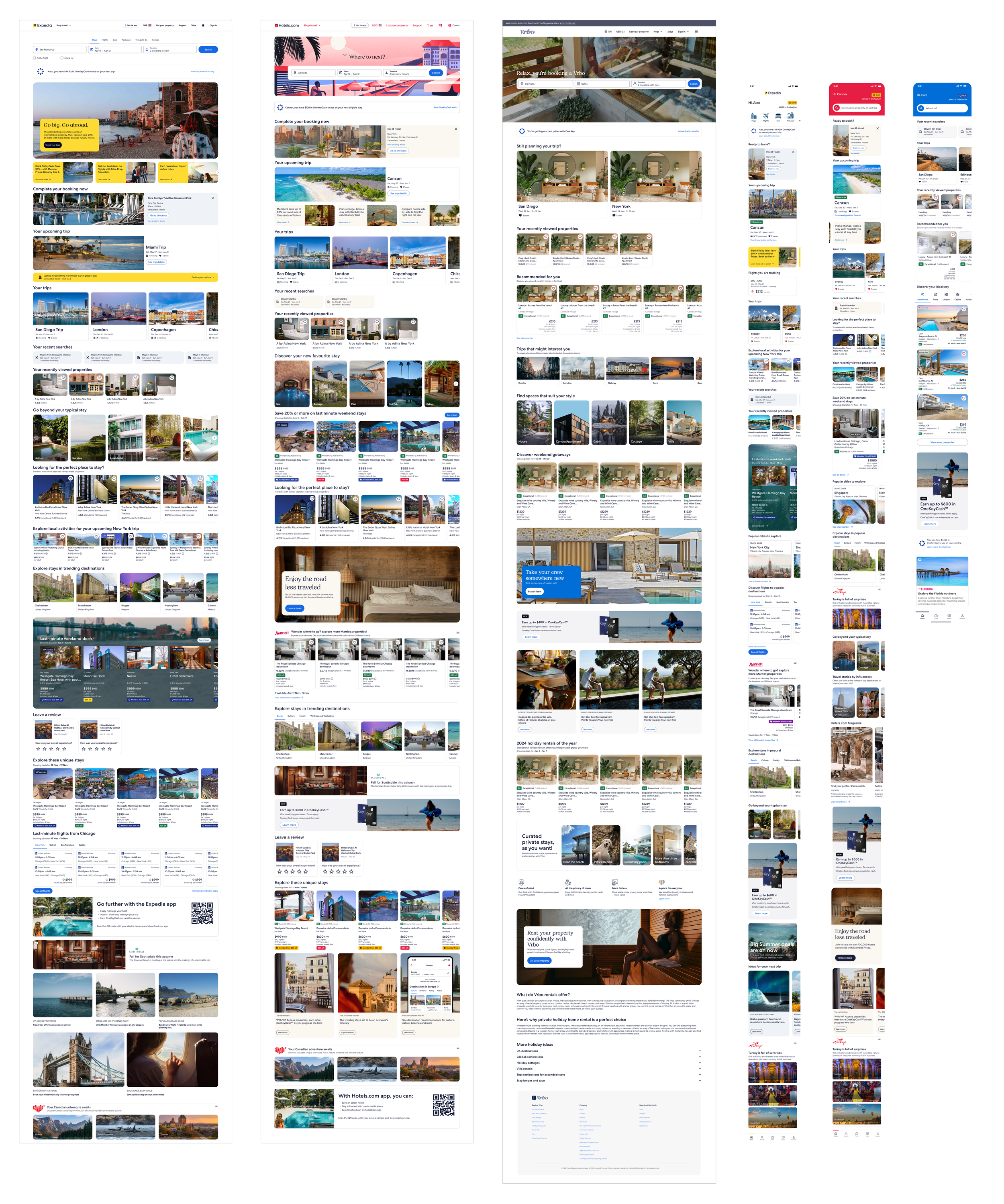
Expedia, Hotels.com and Vrbo Homepage experiences that Carl’s team inherited in March 2023.
What we changed
By March 2024, the experience had become a vibrant testbed for features that drove engagement and stickiness through retention-driving features and adaptive layouts.
Personalisation
ML-driven personalisation placements to accelerate & scale model updates:
Attach using an ML model to determine the best next LOB.
Recommendations for properties and destinations using ML strategy.
Property themes are ranked using an ML model.
Non-ML-driven personalisation:
Pickup where you left off features so that travellers can easily continue their journey (Saved and booked trips, recent searches, and finishing their booking).
Traveller recognition
One Key Information.
Brand differentiation and expression
Use the platform to scale designs across brands, countries, and channels so each brand can stand out, target the right customers, meet travellers’ needs, and build trust.
Hotels.com: frequent, short, deal‑led trips; fast planners needing digestible inspiration and strong value cues.
Vrbo: group planners where the house is the trip, with heavy planning load and group‑fit trade‑offs.
Expedia: passionate, frequent travellers planning whole‑trip, multi‑destination journeys.
Drive Conversion
From static ads with low engagement and a focus on search, to targeted experiences measured by meaningful results.
Conversion and monetisation of direct traffic
Showcase the range and breadth of our product offering through recommendations and shoppable content.
Meso (partner gallery ad placements, native video and sponsored guides)
Targeted Marketing & Brand Partnership Tie-Ins
X-sell, Attach, multi-trip UI
Sign-in, sign-up & App Install
Expedia, Hotels.com and Vrbo Homepage experiences that Carl’s team had created by March 2024.
Transforming Home
Adapt the Homepage experience to travellers’ needs at each stage of the trip through research and rapid testing to learn what resonates and when, meeting user needs that drive business value.
-
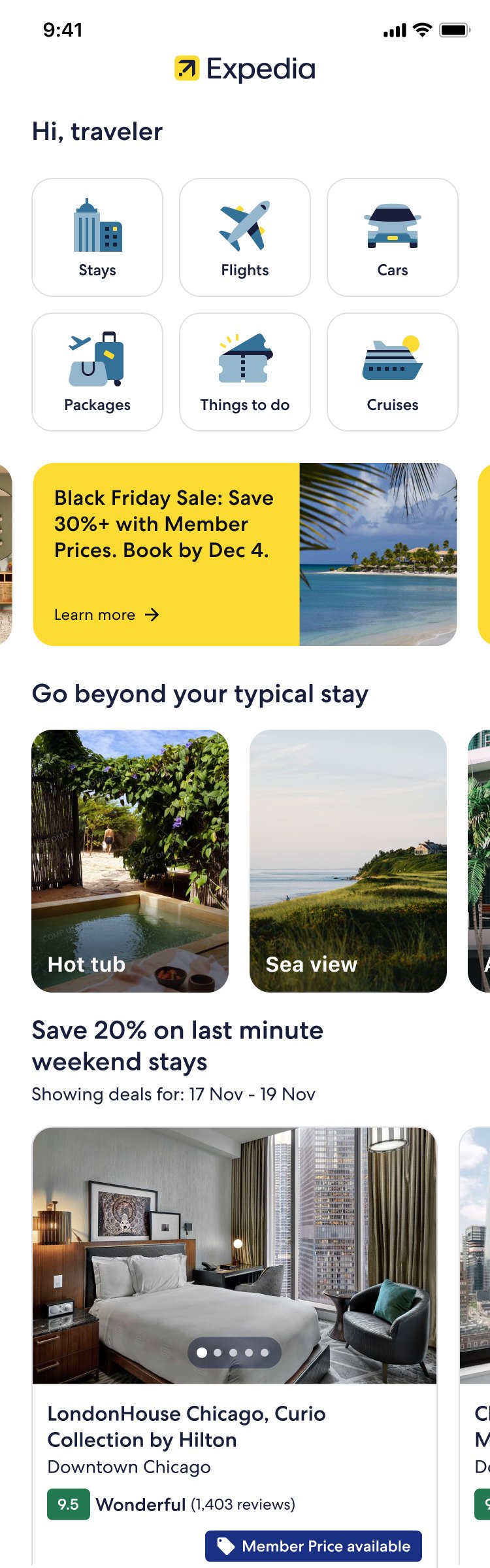
1. DISCOVER
Uncover travel opportunities and be inspired
-
2. SHOP
Pick up where I left off.
See recommendations based on recently viewed.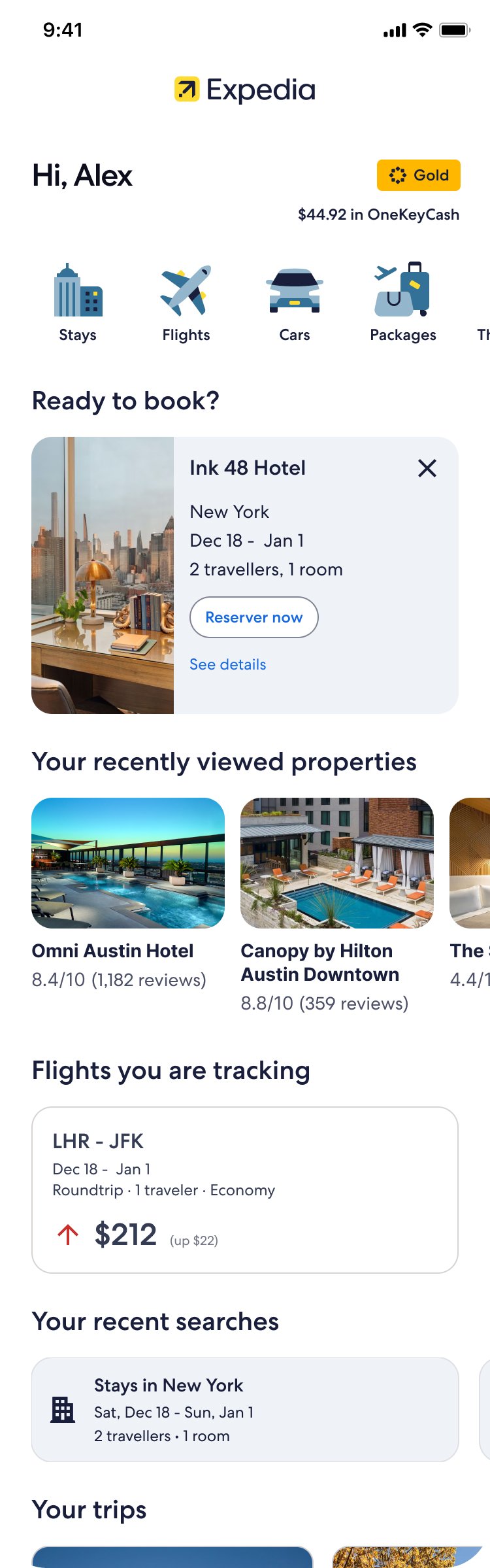
-
3. PRE-TRIP
Check key logistical details.
Discover extras to make my trip special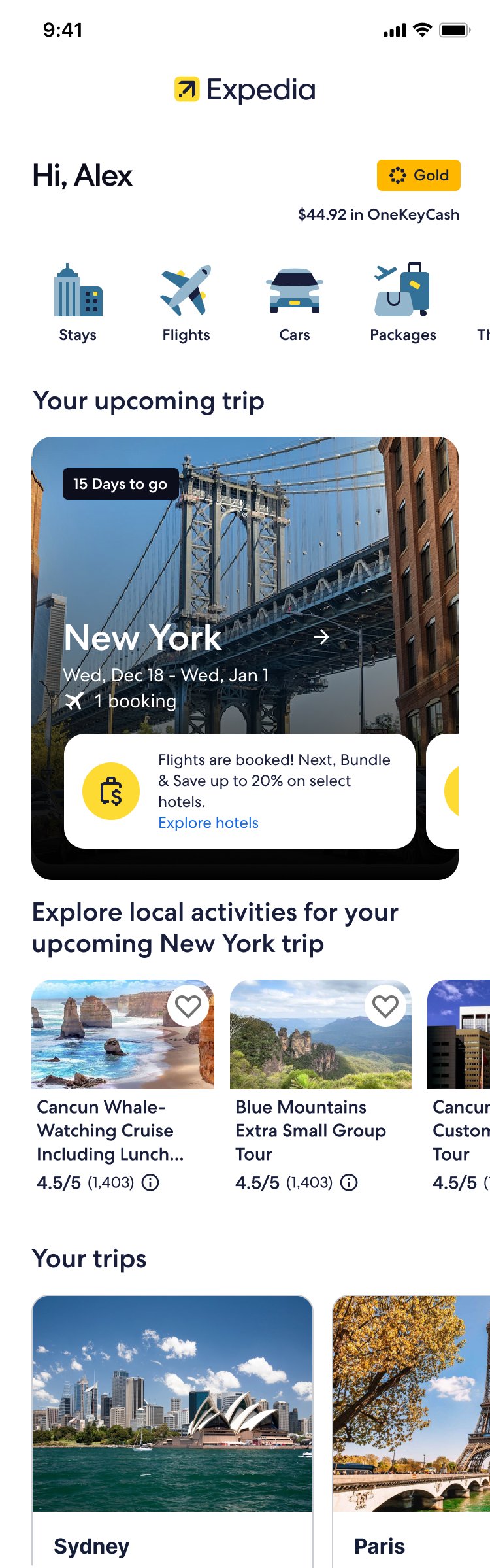
-
4. IN-TRIP
Quickly access key details about my booking.
Support when something goes wrong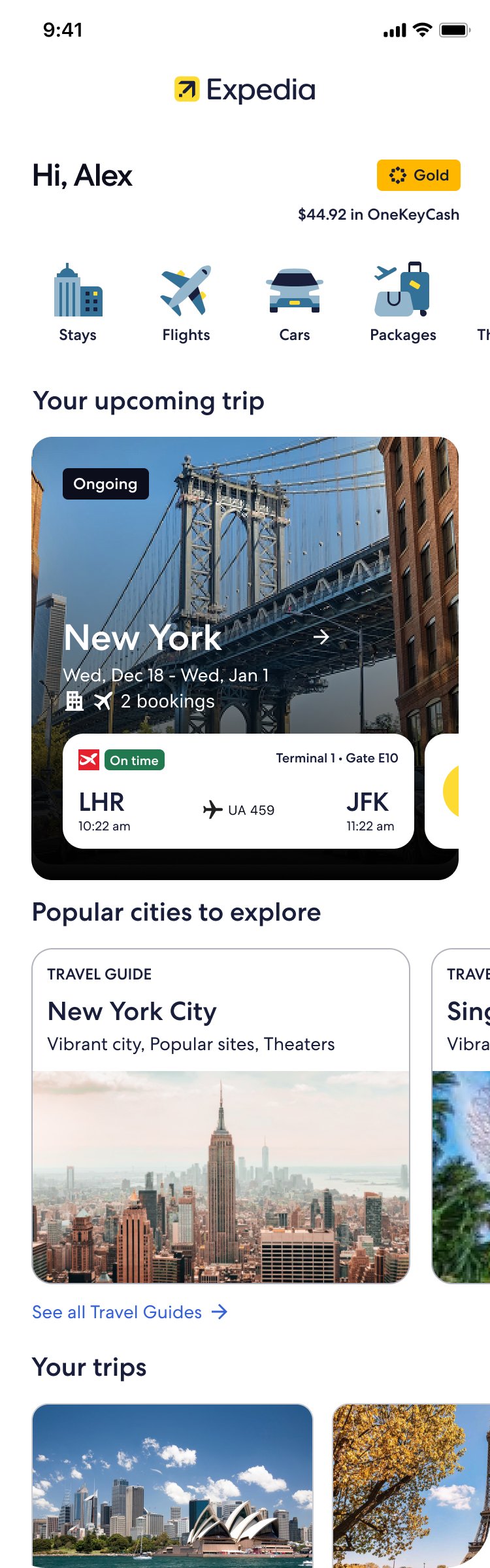
Team vision, goals and approach
-
Make Home the ultimate 'gateway' to unforgettable travel experiences, empowering travellers to discover, plan, and shop for their next trip with confidence.
For new users, we want to connect compelling brand stories with shoppable content & recommendations.
For returning users, we want to increase conversion and customer lifetime value through ML-driven personalisation and recommendations.
-
Home team defines and delivers solutions for traveller & business needs, working with partners
Overall key jobs, structure, and content/modules needed
Search Entry points & navigation
Product showcases
Overall experience quality
Brand/product marketing components
Pick up where you left off, and traveller journey contextualization
Home team leads or partners on delivering end-to-end experiences
Upcoming Trip
Consistent messaging & visual styling for key propositions like Loyalty & Attach
Maintain coherent deal/offer messaging
Home participation in onboarding
Home team enables other teams to optimise or update specific modules
OneKey module: content/UI is owned and optimised by Loyalty
Brand Messaging modules: managed directly by TEaL (Traveller Engagement and Loyalty) and Brand Marketing
App Download banners: managed by App Growth
Support entry creation point creation, e.g. Travel Shops, Reviews
Governance process (include steercos, peer review, UAT standards)
Support and align with Homepage Partners & Stakeholders
Media Solutions (MeSo) - Sponsorship placements
Brand/Marketing - Overall guidance, value props, priority messaging
Traveller Engagement & Loyalty - Promotions & Campaigns
Other Product & Design Teams with an interest in exploring entry points, features and running tests on Home.
-
The team began with a focus on fixing the basics, before establishing a strategy built around personalisation & brand expression
Phase 1: Establish the team and fix the basics
Fix visual bugs & low-quality imagery
Remove or deprioritise stale, low-engagement content
Set up governance to drive up quality and make sure delivery is seen through
Establish module sequence for cold & warm
Phase 2: New Home strategy to drive CVR & establish baseline of quality content
Two experience pillars: Home Personalisation & Brand Expression
Personalised pick up where you left off & recommendations
Refreshed brand visuals & messaging, and introduced product showcases
Worked with partners to establish necessary capabilities
Phase 3: Deepen intelligent personalisation & brand expression
Differentiated brand expression via content & layouts
Intelligent personalisation leveraging multiple contexts to prioritise and customise
Leverage multi-LOB product showcase capabilities to target brand audience
Unlock complex & ongoing brand messaging & integration use cases
-
Personalization
Relevant recommendations
Personalization features
Increase ML-enabled placements on Home to accelerate & scale model updates
Build new recommendation placements, including for cold start use case
Drive engagement and stickiness through retention-driving features and adaptive layouts
Brand Differentiation
Compelling Brand Story
Compelling brand positioning
Targeted marketing
Build trust in our brand
Drive Conversion
Conversion and monetisation of direct traffic
Showcase the range and breadth of our product offering through recommendations and shoppable content.
Meso (partner gallery ad placements, native video and sponsored guides)
Targeted Marketing & Brand Partnership Tie-Ins
X-sell, Attach, multi-trip UI
Sign-in, sign-up & App Install
-
Brand & Acquisition
For prospective customers, we need to answer the question “Why shop with us?” with a compelling brand story that showcases the range and breadth of our product offering and provides easy ways to start shopping.
Home needed to play a central role in acquiring new customers and driving direct traffic acquisition through compelling brand positioning, relevant recommendations, and targeted marketing.
Direct channel accounts for 67% of Home visits
The majority of visitors to Home on Web are in a “no-Trip” state, whereas the opposite is true for App.
Home on Web drives over 50% of new customer acquisition, including from SEM & SEO
Conversion & Monetization
Home is critical to driving conversion of new and returning direct traffic and to increasing monetisation via advertising products.
Home is critical to the conversion and monetisation of direct traffic, as well as to increasing LTV through timely, relevant recommendations and personalisation features.
85% of visitors on App are return visitors, 47% on Web
Home CVR declined since 2019 in most cases, due to a lack of CVR focus
MeSo's revenue from Home dropped 79% since 2019
Activation & Engagement
Encouraging new and returning customers to take meaningful actions on our sites that unlock the best of our offering for them and encourage them to return.
Home has the highest sign-in rate in the core HP->CKO flow at 7.7%
22% of owned app downloads
Support & Enhance
Home affords travellers easy access to their trip information, allowing them to add items or access helpful information about their destination.
Home enables travellers to easily access their trip information and add elements or find helpful information about their destination.
17% of App Home visitors are pre-in-trip
Very high CTR on Upcoming & Saved Trips
-
Home as contested real estate:
Legal, brand, loyalty and ads all saw Home as the place to surface their asks. I partnered on the Home Brand Differentiation & Bounce PRD and governance mechanisms to establish clear prioritisation rules, so we could refuse, defer or reframe asks that conflicted with traveler jobs or core stack ordering.
Multi-brand, multi-team alignment:
Three brands, three sets of metrics, and legitimate but sometimes competing strategies. I used shared strategy docs, workshops and crits to maintain one narrative, many configurations, rather than three independent homepages drifting apart.
Avoiding personalised noise:
As we layered modules and ML, Home risked becoming an incoherent, infinite scroll. I pushed for content hierarchy, ML-driven ordering and quality bars for property and destination recommendations before they appeared on Home.
Brand Headpins
Brand Headpins and traveller insights into concrete Home behaviours:
Expedia – “whole‑trip orchestrator”
Inspiration and collections that naturally open paths into flights, stays and things‑to‑do, and a clearer story about why Expedia is the right place to coordinate multi‑leg, multi‑item trips.
Passionate, frequent travellers planning multi‑element trips, often international.
Home acts as a cross‑LOB planner, progressively introducing flights, lodging, cars, packages and attaching via Next Best Action and ML‑driven recs.
Vrbo – “the stay is the trip”
Property-first, category‑led discovery on Home (trip types, occasions, property themes) that mirrors how groups actually decide together, alongside richer description patterns that surface layout, amenities and “fit” early.
Group planners balancing space, layout, amenities and budget across households.
Home leads with property‑first storytelling and categorical recommendations that reflect group‑fit and trip types (family beach weeks, seasonal occasions).
Hotels.com – “hotel expert/value & trust”
Near‑term, value‑forward discovery: nearby and short‑break collections, strong price transparency, confidence‑building signals (ratings, location clarity, neighbourhood cues), and loyalty/value messaging woven into cards rather than bolted‑on banners.
Frequent, short, often last‑minute trips; highly price‑sensitive but care about quality and transparency.
Home leans into deals, price insights, neighbourhood clarity, and loyalty‑led value (earn/burn, rewards as a flywheel)
Research Insights
-
When the destination is known, travellers begin to plan their trip.
When the destination is unknown, travellers look for inspiration for trip ideas.
When travellers first visit the homepage, they find it well organised and inspiring. They especially love having the six LOB icons at the top of the page.
However, they are unlikely to scroll for long; for some, too many recommendations can feel random.
When travellers are not actively planning a trip, they seek opportunities to take a trip and are inspired and motivated by deals that cater to their traveller type, preferences, and location.
Travellers crave personalised travel recommendations. They are disappointed to continue seeing recommendations and inspiration for places they would not consider travelling to
Travel inspiration that enables travellers to explore independently by offering destination categories and trip types to choose from is most helpful.
Showing a few recommendations and deals on the homepage is not helpful for trip discovery if the traveller is not interested. Providing travellers with destination categories and trip types gives them ideas and inspiration to explore their options.
-
When travellers are planning a trip, the only content on the homepage that interests them is content relevant to their trip planning. The homepage should focus on their current trip/trips
Travellers are impressed and appreciate it when the homepage is updated with content that helps them continue planning their trip
Travellers have a lot to think about when planning their trip; seeing recommendations, ads and inspiration for other destinations is not helpful.
Features that help travellers continue planning the logistics for their current trip as well as provide inspiration (travel guides, activities, events happening, etc.) for how to make the most of their trip, are helpful
-
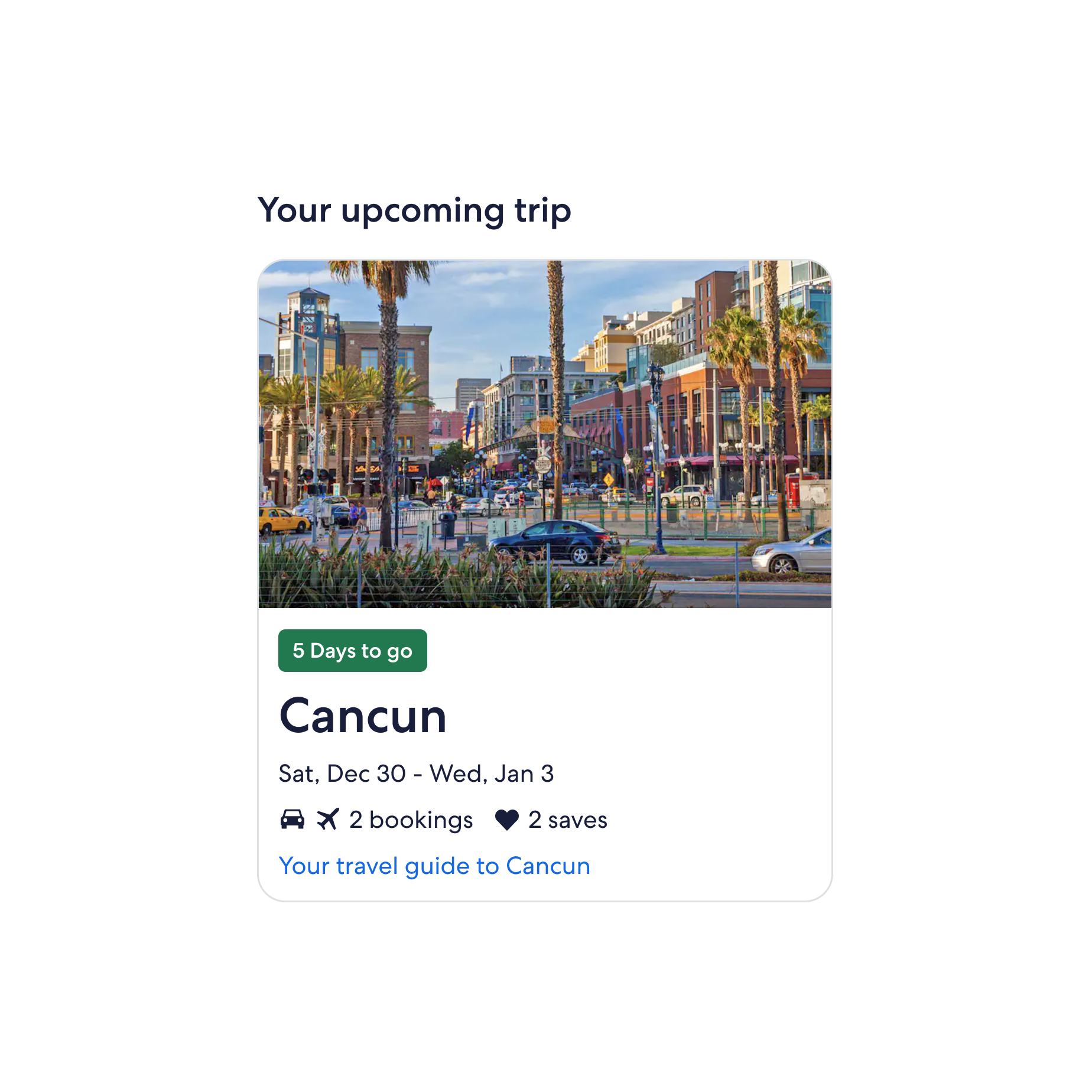
Travellers are delighted to see their upcoming trip at the top of the page
Travellers appreciate seeing their trip dates, icons of what they've booked, and most excitingly, a photo of their destination to get them excited for their trip.
They intuitively know that clicking the module takes them to their trip page, which contains all their booked items and details.
When travellers have a trip booked, they want the app to know what they still need to do and offer these suggestions on the home page.
If travellers have not purchased a car rental, hotel or flight, they want to see these suggestions on the homepage with quick access to book.
Once travellers have finalised their logistics, they search for information to help them plan how to spend their time, including activities, sights, and restaurants. They want to see these recommendations on the homepage.
-
Contextualization / Personalization: When travelers are looking for trip inspiration, they are motivated by discovery content and deals that consider their traveler type, preferences, and location.
Trip-to-idea: Helping travelers discover by trip types and destination categories enhances their experience by providing more trip taking opportunities.
Digestible: When they are just browsing and getting initial ideas for destinations, they want a quick preview so they can gauge whether they want to learn more.
Social proof: Travelers HIGHLY value UGC (all segments but particularly Expedia headpin)
Context is king: When travelers are planning a trip, the only content on the homepage that interests them is content relevant to their trip planning. They appreciate seeing the homepage adapted with helpful information relevant to where they are in their journey, but recommendations not related to their trip(s) feels random.
Prioritization: Content relevant to their journey phase should be higher up on the page; this includes content or links that help travelers continue planning their trip whether in the warm or hot stage (upcoming trip, discovery, reminders, ‘pick up where you left off’, confirmations, attach).
Attach: Seeing dynamic attach cards based on their journey stage is helpful. However, the experience can feel pushy if they are not interested. Allowing travelers to dismiss attach cards allows them to focus on the cards they find helpful such as reminders. It gives them control and shows that we have their best interest in mind.
Studies
Adaptive Home Concept Testing (Moderated Interviews)
Brand Differentiation Research Report.pptx (Moderated Interviews)
Traveller return experience on homepage (Moderated Interviews)
Home Complete Series - Cold Stage (Moderated Interviews)
Home Complete Series - Warm Stage (Moderated Interviews)
Home Complete Series - Hot Stage (Moderated Interviews)
IA Card Sort - Naming, Discover, Explore (Unmoderated Activities)
Adaptive Home Northstar Concept Testing (Moderated Interviews)
Evolution of Upcoming Trip Module (Moderated Interviews)
Complete your booking from the Homepage (Moderated Interviews)
Adaptive Home Northstar Concept Testing (Moderated Interviews)
Personalisation on Home
A personalised homepage helped travellers move more smoothly from inspiration to booking and through the trip itself by making the experience feel relevant, timely, and useful from the moment they arrived, which shifted the homepage from a generic feed to a more responsive experience that better recognised returning travellers, surfaced more relevant content at the right moment, and made it easier to continue planning, prepare for an upcoming trip, or get help while travelling.
Achieved in three ways:
Recognising the traveller when they arrived, for example through tailored greetings, loyalty recognition, onboarding prompts, and content that reflected what was already known about them.
Responding to where they were in their journey, whether they were just exploring, actively shopping, preparing for an upcoming trip, or already travelling.
Learning from their behaviour and preferences over time so the experience required less effort, showed more relevant recommendations, and made each next trip easier to plan and book.
Delivered in three phases
Gradually increasing the homepage's sophistication while achieving measurable gains at each step.
-
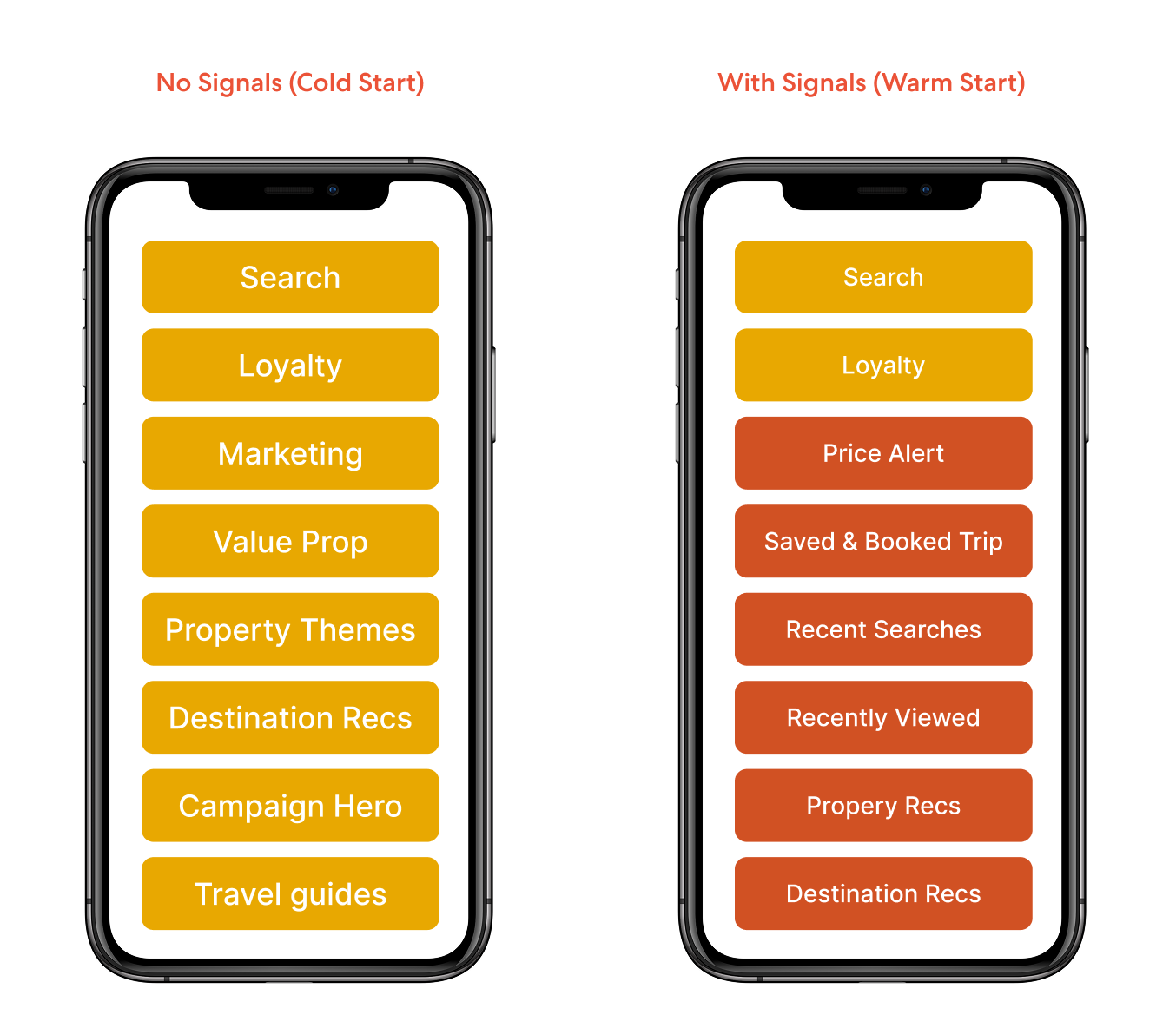
Phase 1: Personalised content in a fixed layout
Phase 1 made the homepage feel smarter without redesigning it, while also building the core personalisation capability needed for later phases. Personalised modules were added in fixed positions, using simple signals such as whether someone was new or returning, had an active search, or had an upcoming trip.
Feature types: greetings and recognition, recent searches, recently viewed items, saved and booked trips, destination and property recommendations.
Fixed page structure
Personalised content when signals existed
Core personalisation capability built through defined modules and signals
More relevant content surfaced earlier for returning travellers
-
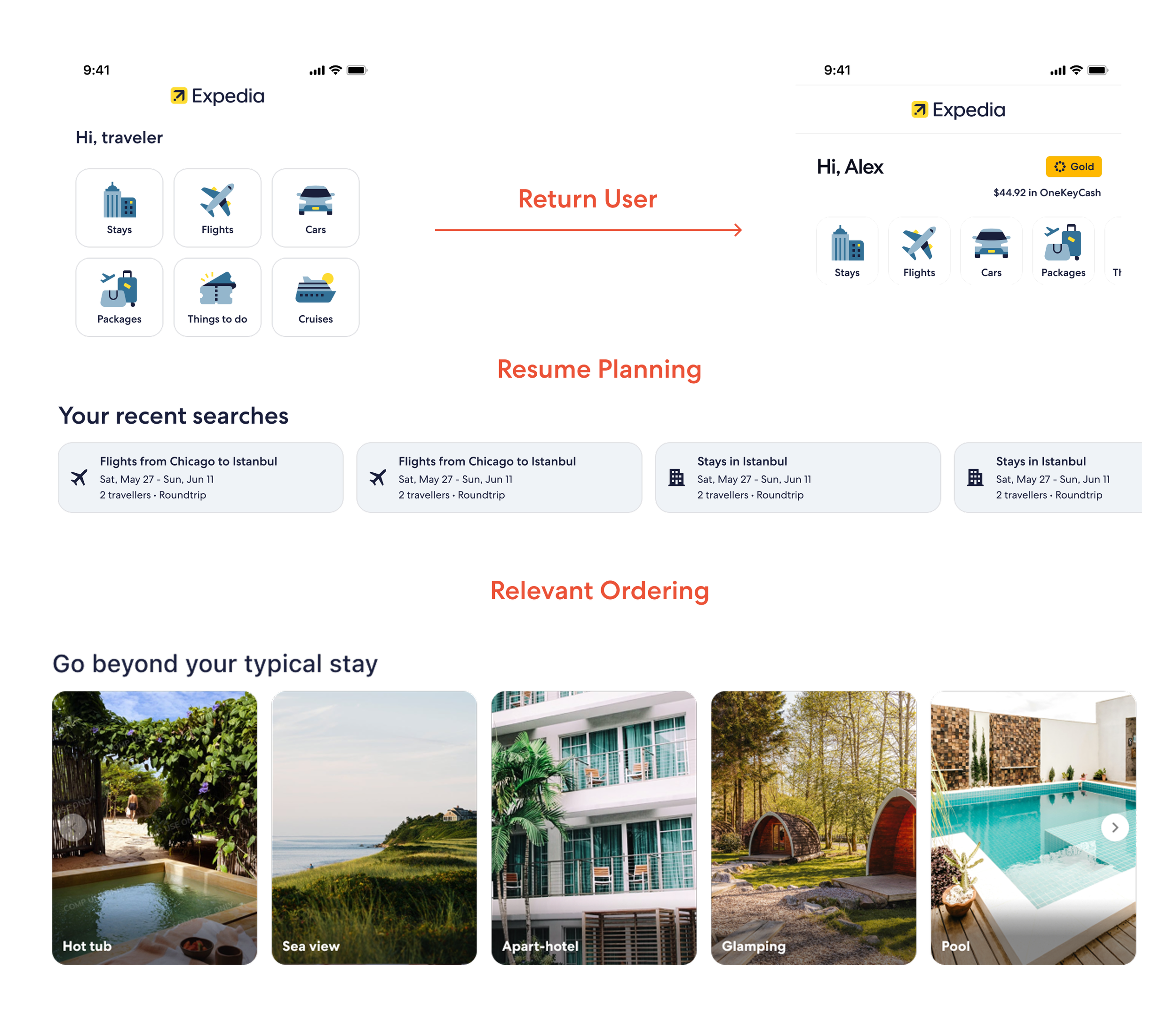
Phase 2: Smarter sections
Phase 2 kept the overall page structure, but made the content inside key sections more adaptive. The homepage could adjust the search experience, prioritise the most relevant continuation content, tailor recommendations, and show more relevant prompts based on the traveller’s context.
Feature types: adaptive search entry, pick-up-where-you-left-off experiences, context-aware recommendations, onboarding and engagement prompts.
Fixed structure, adaptive sections
Better “pick up where you left off” experiences
Recommendations and prompts tuned to journey stage and traveller context
-
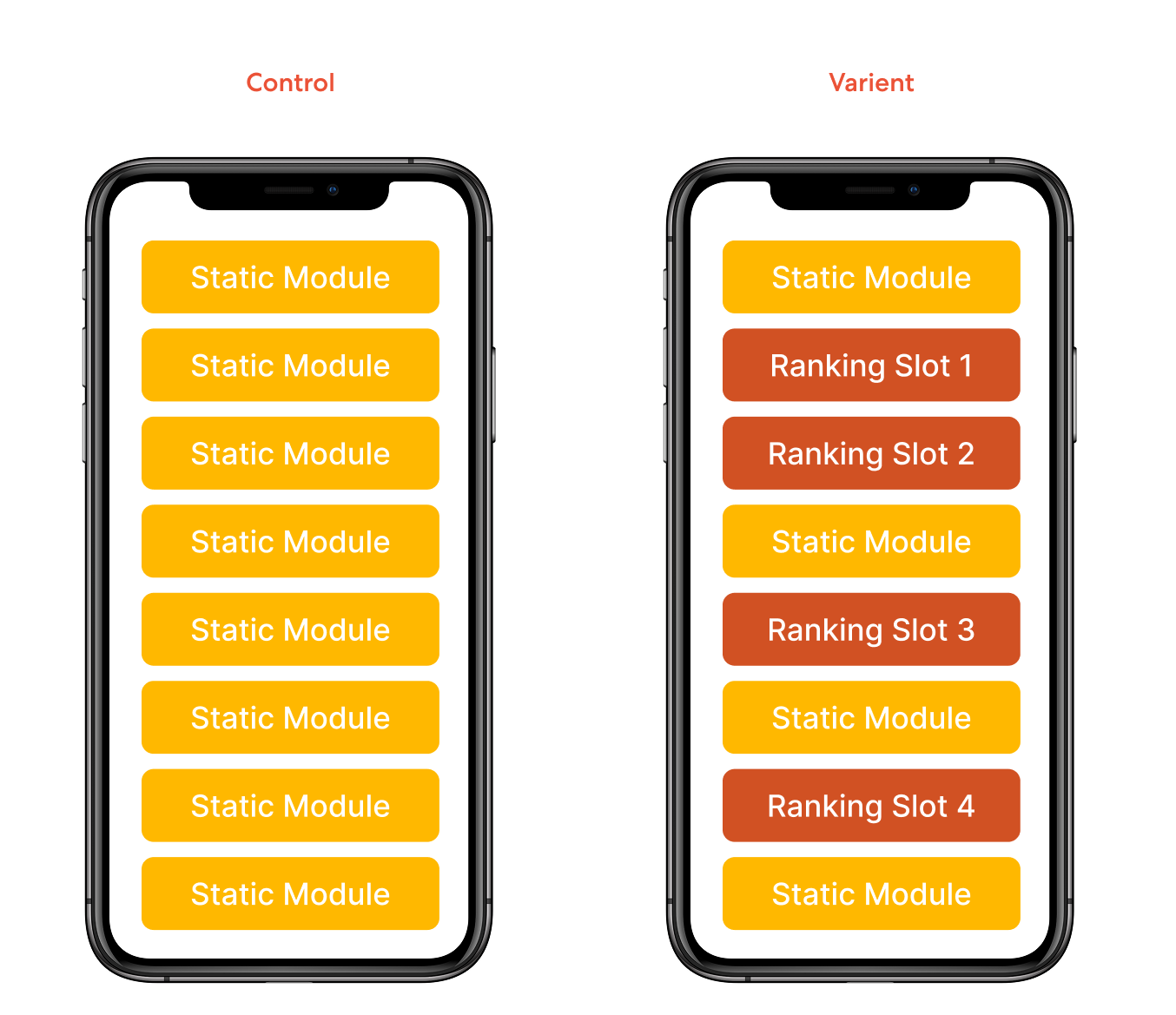
Phase 3: Smart page organisation
Phase 3 made the homepage truly adaptive. Instead of only personalising content within fixed sections, it could decide which modules to show, where to place them, and which objective to prioritise for each traveller.
Feature types: above-the-fold prioritisation, module ranking, dynamic show/hide logic, objective-based page orchestration.
Personalised module order
Smarter show/hide decisions
Above-the-fold content tailored to traveller context
Ranking informed by journey stage, recent behaviour, trip details, and predicted interests
The goal was to make the homepage feel less like a fixed storefront and more like a responsive travel companion that helped each traveller take the next best step in their journey.
Module Engagement
Transforming Home into a personalised, trip-aware experience
Testing, learning, and contextualisation
Leadership’s guidance was to run as many tests as possible, with particular emphasis on conversion (CVR, measured in basis points), overall growth through Mean Shopping Visits (MSV), and engagement through click-through rate (CTR).
That mandate triggered a rapid wave of homepage experimentation from across the business. While it sometimes created a frenzy of feature launches, it also helped the team quickly understand what resonated on Home and where value was being created.
Over roughly a year, Home evolved from a surface largely defined by search entry and marketing tiles into a more contextual, personalised experience with a broader mix of upper and lower-funnel capabilities, improving conversion, showcasing product breadth, and elevating brand expression.
Once that richer set of features and capabilities was in place, the next challenge was to bring more order and relevance to the experience by contextualising Home around the stage each traveller was in as they planned their trip.
Engagement with non-Search Form content increased greatly since 2023, +25% on App and x7 on Web
Module Engagement Highlights
Upcoming Trip on App has the highest interaction at 47%
Followed by Trip Planning modules & contextual/personalised content
Interaction pattern on Home during different Journey Stages
A large proportion of the Home audience on Web is in the Inspiration stage, while on the App, we see them in the planning stage.
Higher App Engagement during the In-trip stage suggests that travellers might be visiting home while accessing the itinerary or exploring more options to add to their itinerary
Brand/Platform Comparisons
The examples below indicate how modules performed (Data between Jan 2025 and April 2025), which informed homepage placement/prominence, further iterations, and an understanding of the nuances required across brands and platforms.
-
![]()
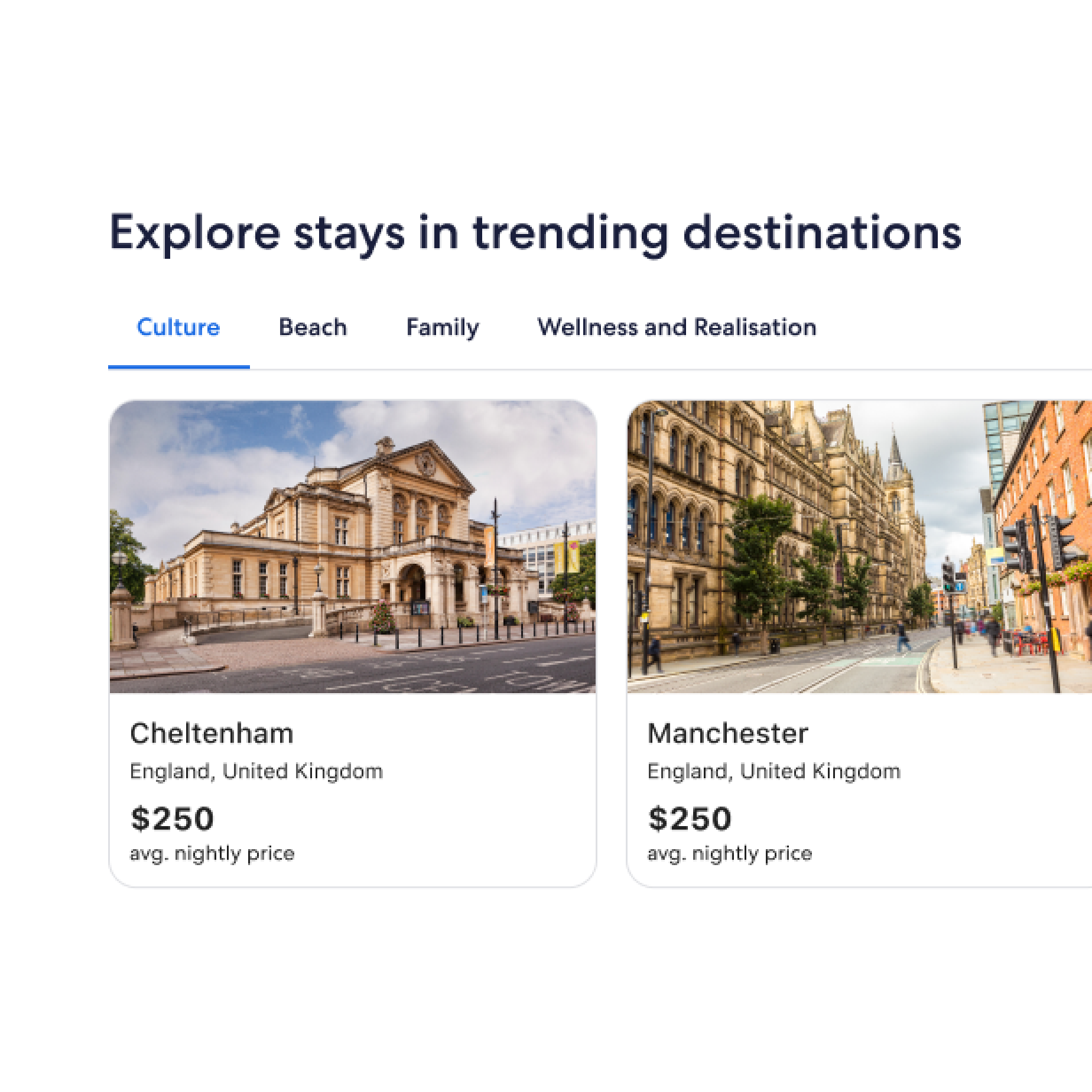
Destination Recommendations
3% CTR - Expedia App
3% CTR - Expedia Desktop
2% CTR - Hotels.com App
2% CTR - Hotels.com Desktop
1% CTR - Vrbo App
1% CTR - Vrbo Desktop
-
![]()
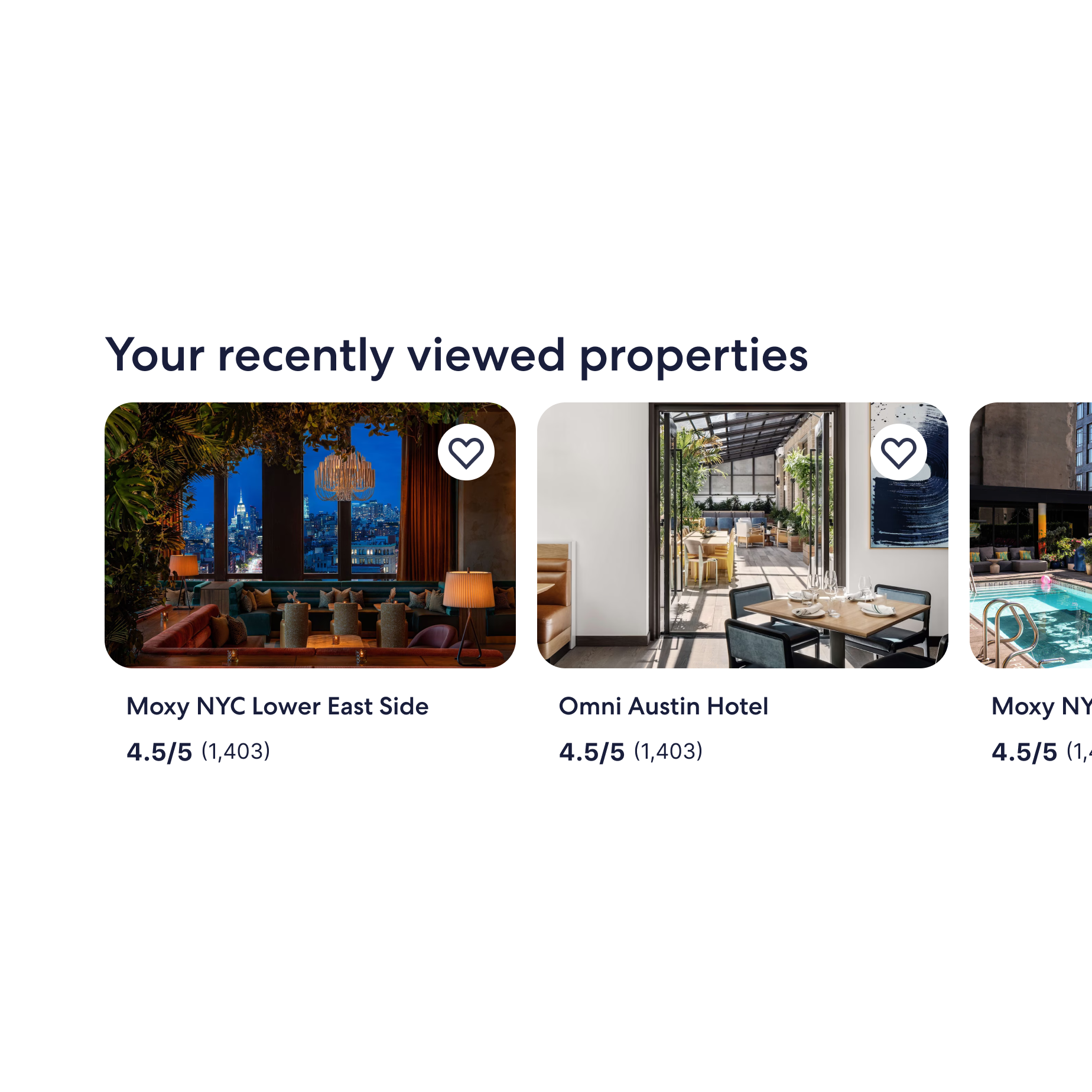
Recently Viewed
6% CTR - Expedia App
4% CTR - Expedia Desktop
9% CTR - Hotels.com App
5% CTR - Hotels.com Desktop
11% CTR - Vrbo App
4% CTR - Vrbo Desktop
-
![]()
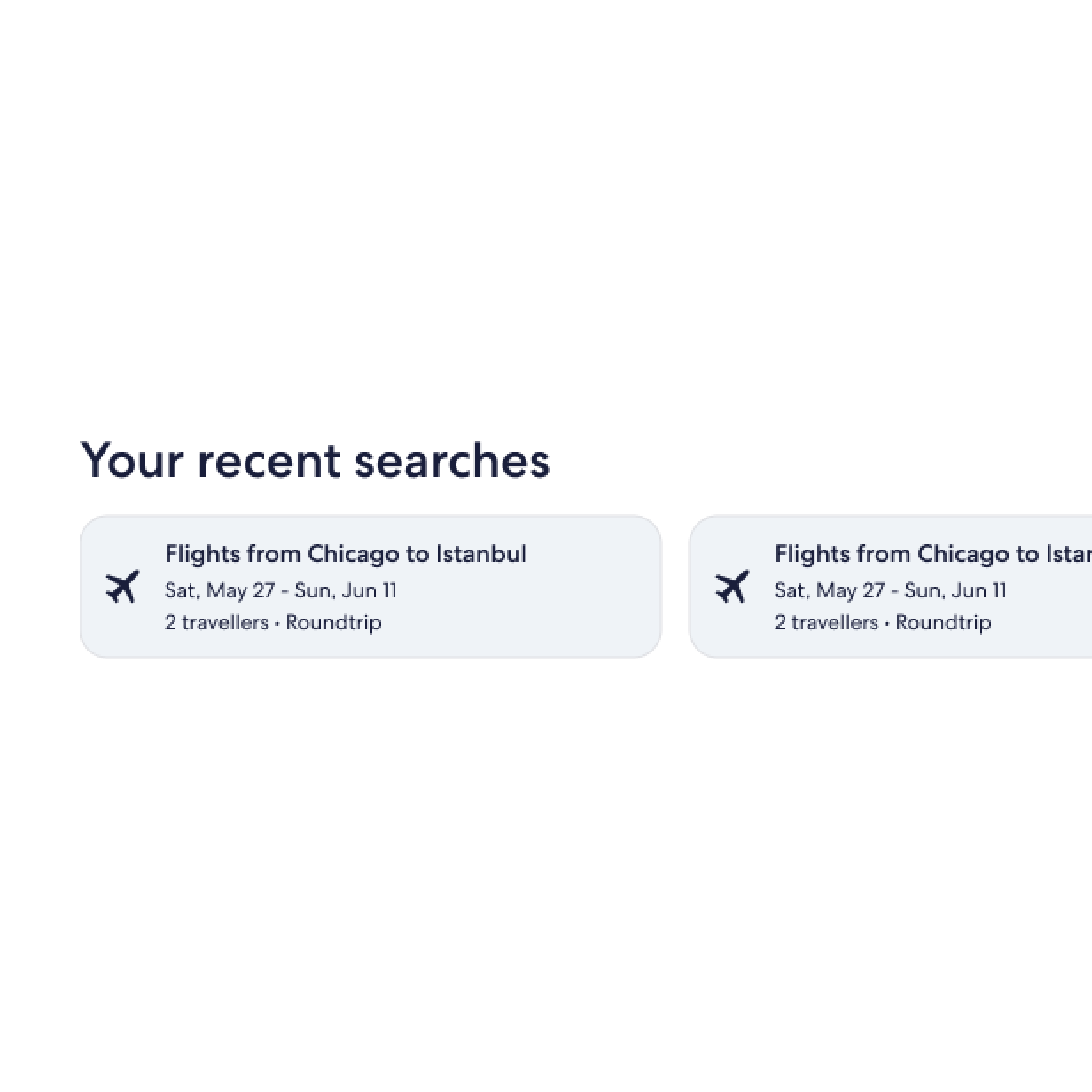
Recent Searches
6% CTR - Expedia App
1% CTR - Expedia Desktop
9% CTR - Hotels.com App
1% CTR - Hotels.com Desktop
6% CTR - Vrbo App
-
![]()
Direct to Checkout
18% CTR - Expedia App
12% CTR - Expedia Desktop
26% CTR - Hotels.com App
14% CTR - Hotels.com Desktop
-
![]()
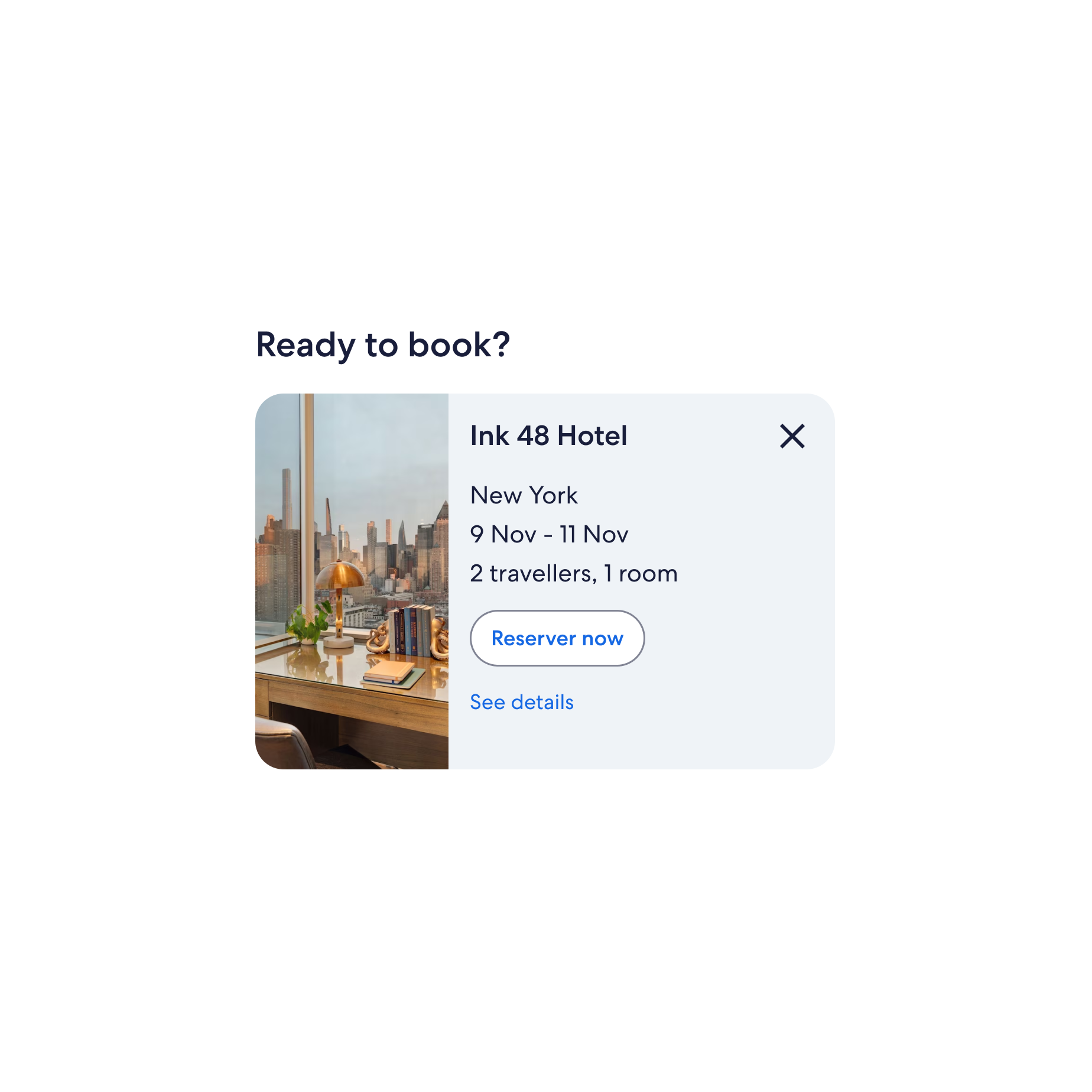
Upcoming Trip
35% CTR - Expedia App
52% CTR - Expedia mWeb
23% CTR - Expedia Desktop
36% CTR - Hotels.com App
42% CTR - Hotels.com mWeb
19% CTR - Hotels.com Desktop
34% CTR - Vrbo App
Vrbo mWeb (no data)
Vrbo Desktop (no data)
-
![]()
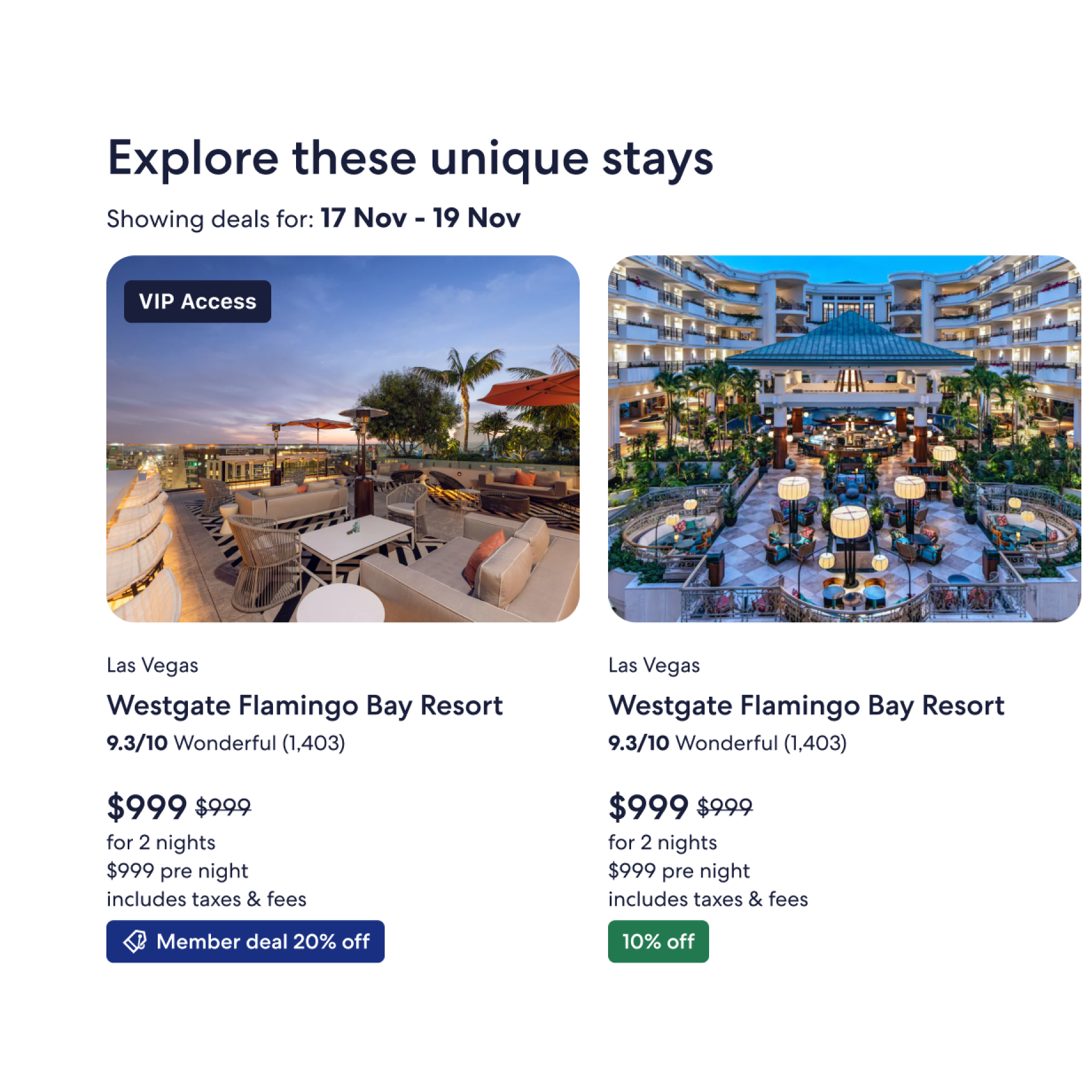
Unique Stays
8% CTR - Expedia App
11% CTR - Expedia mWeb
4% CTR - Expedia Desktop
9% CTR - Hotels.com App
11% CTR - Hotels.com mWeb
4% CTR - Hotels.com Desktop
Vrbo App (no data)
Vrbo mWeb (no data)
Vrbo Desktop (no data)
-
![]()
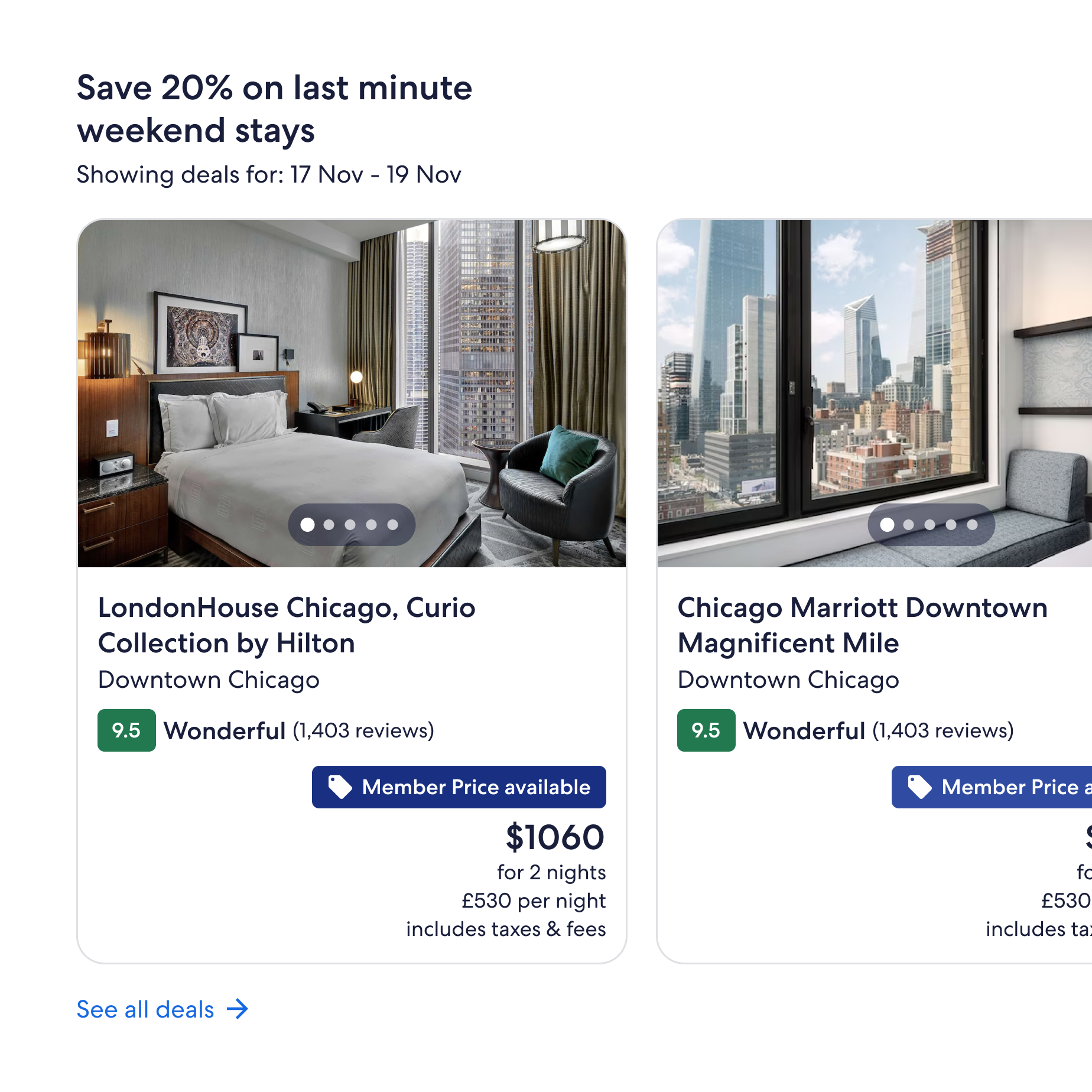
Last Minute Weekend Deals
1% CTR - Expedia App
9% CTR - Expedia mWeb
5% CTR - Expedia Desktop
1% CTR - Hotels.com App
18% CTR - Hotels.com mWeb
9% CTR - Hotels.com Desktop
3% CTR - Vrbo App
8% CTR - Vrbo mWeb
3% CTR - Vrbo Desktop
-
![]()
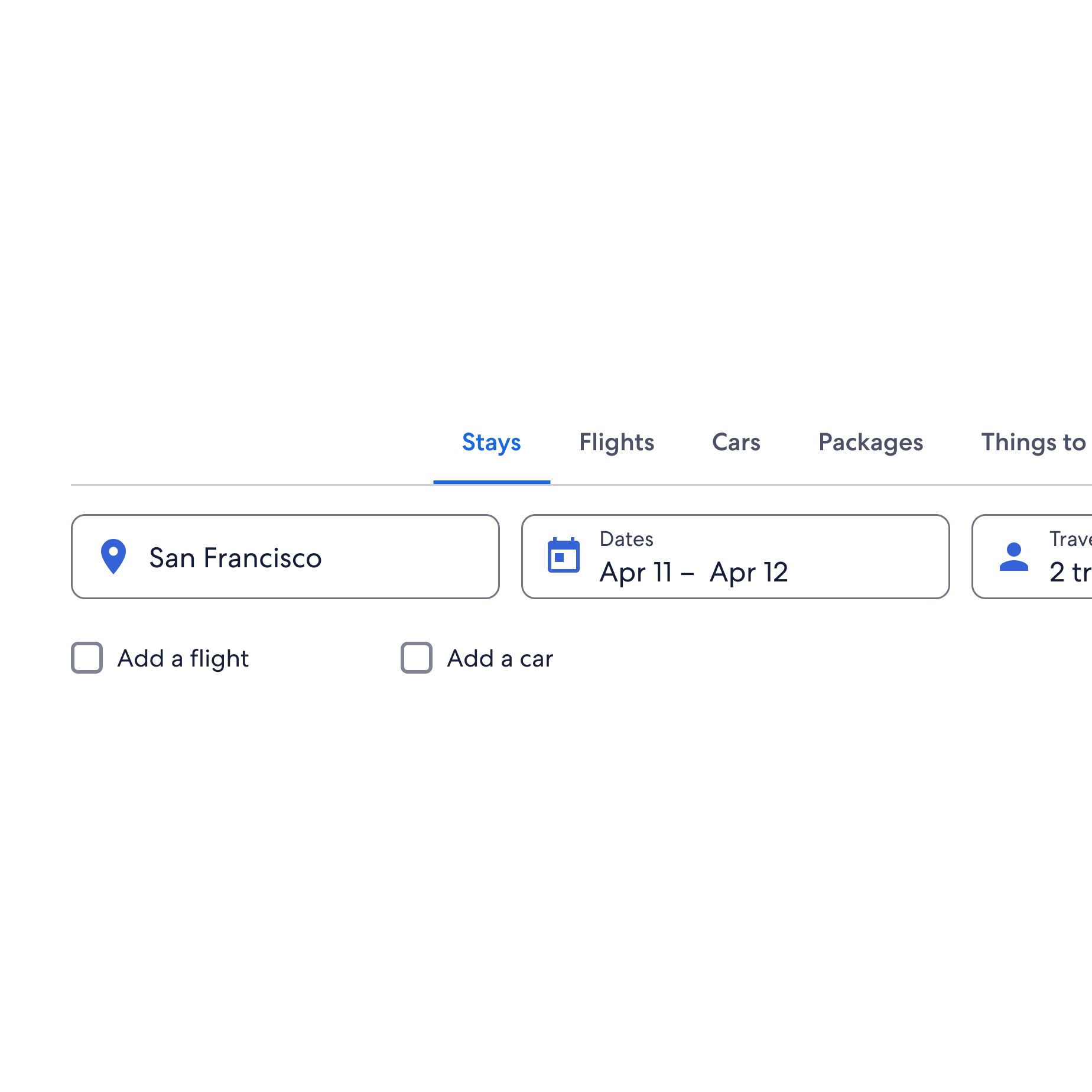
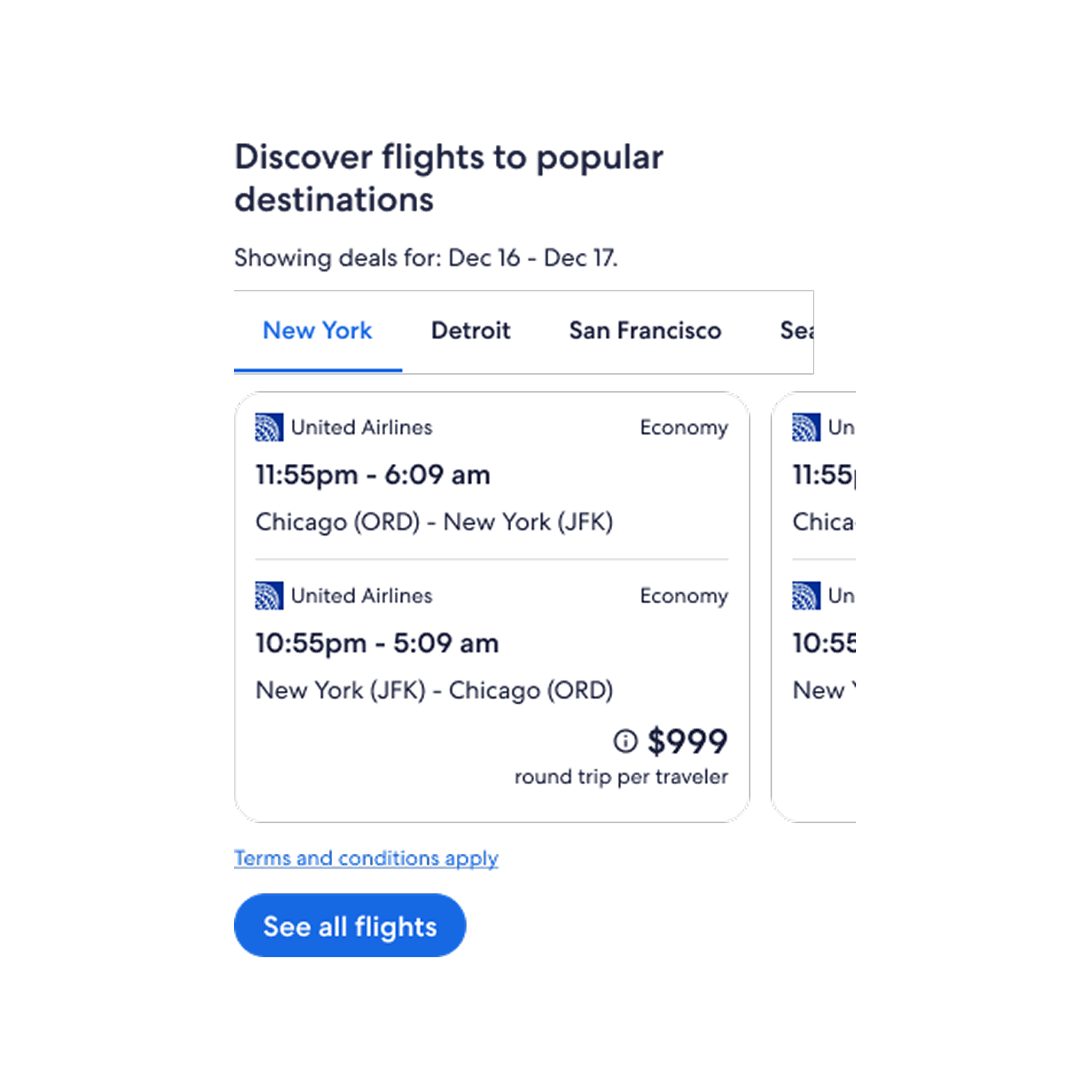
Search From
49% CTR - Expedia App
53% CTR - Expedia Desktop
43% CTR - Hotels.com App
44% CTR - Hotels.com Desktop
32% CTR - Vrbo App
20% CTR - Vrbo Desktop
-
![]()
Flights Collections
5% CTR - Expedia App
11% CTR - Expedia mWeb
4.2% CTR - Expedia Desktop
-
![]()
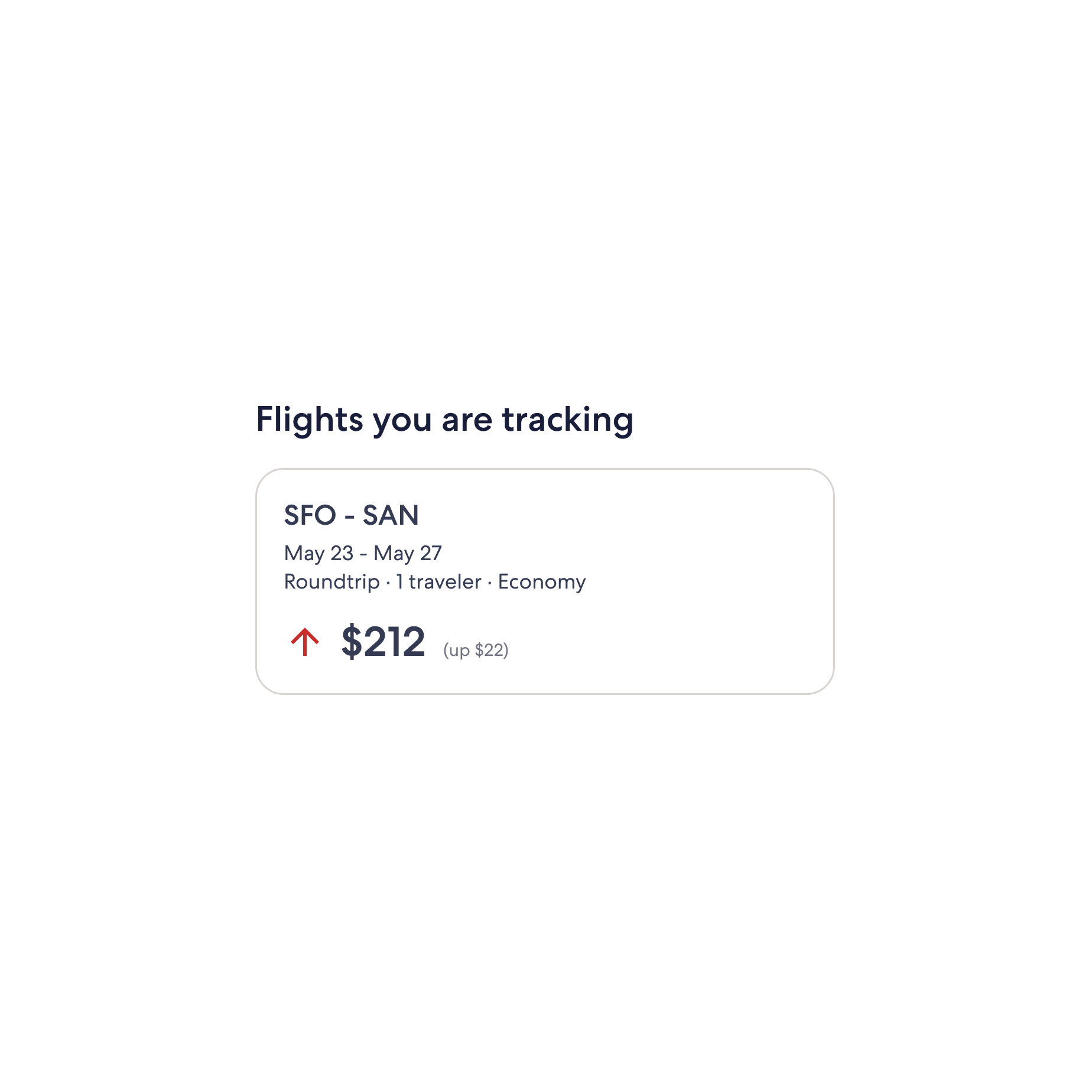
Flight Tracking
15% CTR - Expedia App
-
![]()
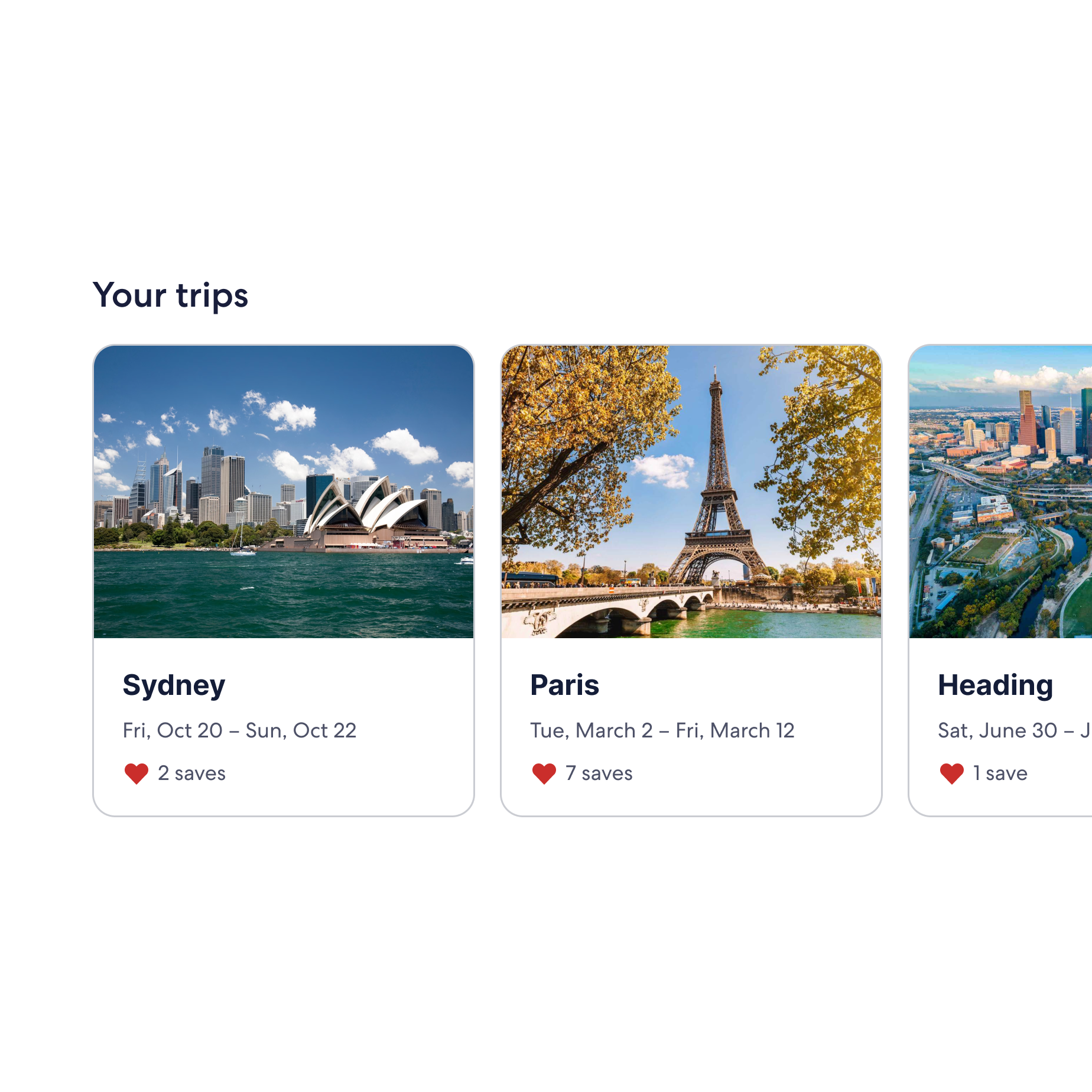
Saved and Booked Trips
10% CTR - Expedia App
5% CTR - Expedia Desktop
15% CTR - Hotels.com App
13% CTR - Hotels.com Desktop
17% CTR - Vrbo App
20% CTR - Vrbo Desktop
Impact of Personalisation on Homepage
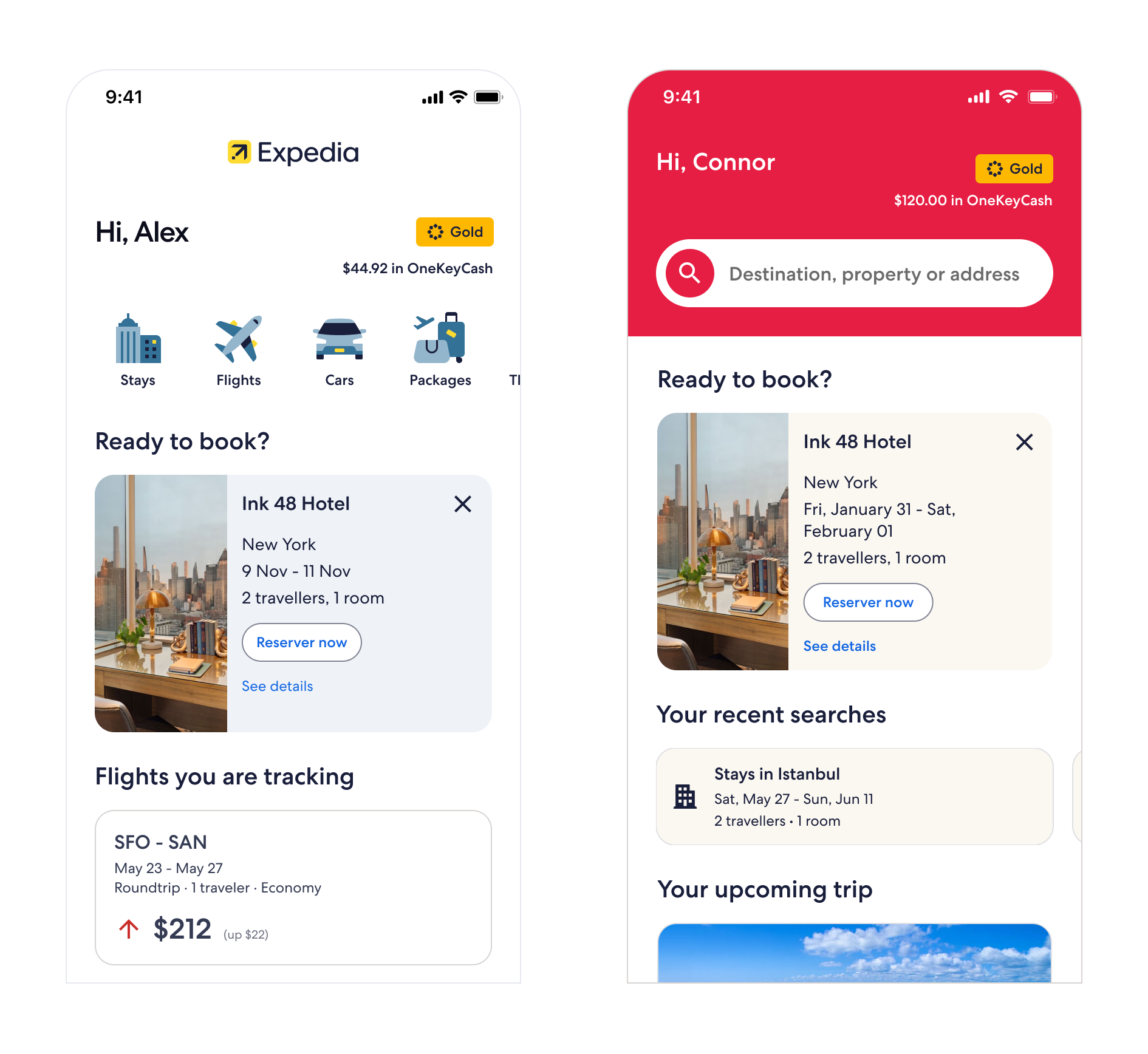
Significant changes to Home introduced a broader, more personalised experience, with new features and optimisations contributing more than $32M in GP overall.
Trip continuation and planning improvements:
Recent Searches UI improvements.
Direct to Checkout from Home.
Improved Saved and Upcoming Trip features.
Last-searched-destination context.
Notable feature callouts:
Personalised recognition and greeting + Surface Traveller One Key tier and One Key Cash = Approx. $1.3M Expedia GP.
Condensed business-line search entry for returning travellers = Approx. $3.9M Expedia GP.
ML-personalised and ranked Property Themes contributed = Approx. $5.5M in BEX + Hotels.com CVR GP.
Direct-to-Checkout from Home contributed. = approx. $6.35M annualised GP across Expedia and Hotels.com.
Brand Differentiation
Switching from designing at scale to positioning our brands as the travel authority through highly crafted storytelling, editorial content, strategic partnerships, and unforgettable experiences
Brand Expression
Brand expression via new shoppable & editorial-focused product showcases and refreshed visual elements & messaging placements.
Lodging showcases (Deals collections, Unique stays)
Tailored recommendations (Destinations, Activities)
Refreshed brand visuals with a new identity and key messaging
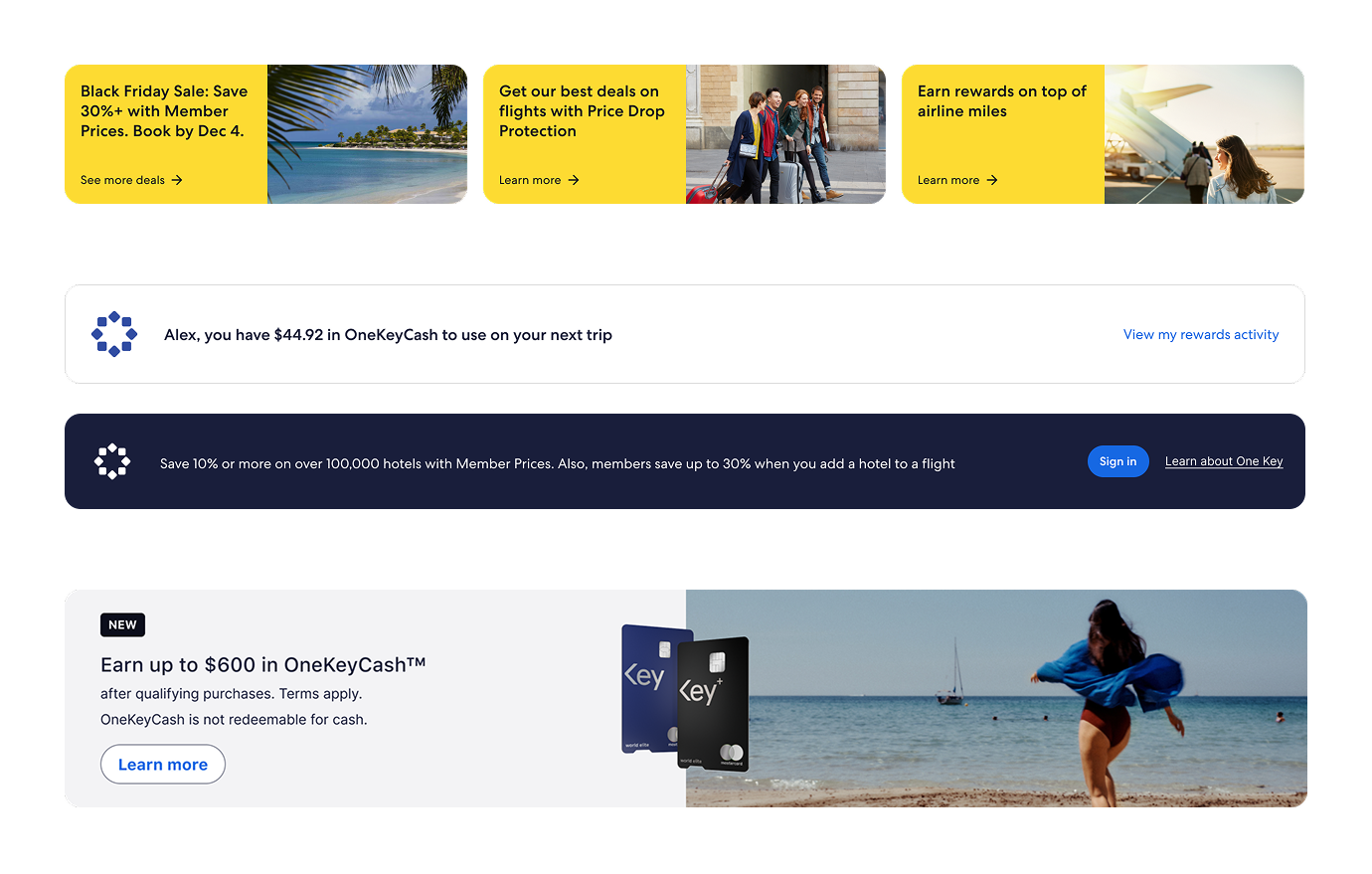
Promote our benefits
Our unique features and services set us apart and give us a competitive edge in attracting travellers looking for the benefits we offer
By highlighting key features, including product innovation and emphasising the value proposition, we generate interest and motivate travellers to take action.
Promoting our loyalty program helps travellers understand how to get even more value from shopping with us by rewarding their purchases and giving them incentives to book more.
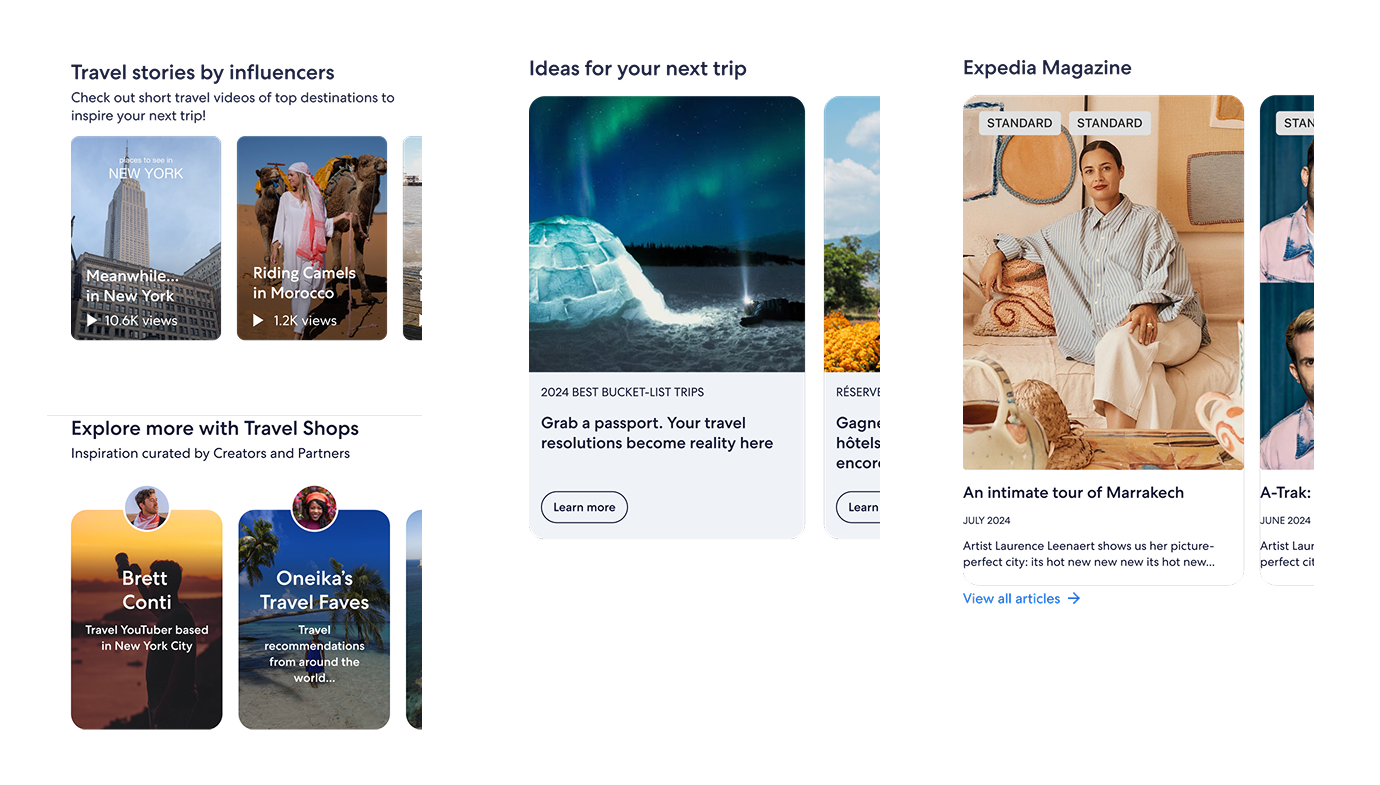
Shoppable Content
Pair brand stories with visually appealing and relevant product recommendations
Regular updates, aligned with the brand calendar, to strengthen travellers’ trust in us as a travel expert
Culturally Relevant & Trending
Position our brands as culturally attuned and as offering unique experiences that resonate with our travellers' interests.
Collaborating with influencers to promote our offerings can increase travellers’ interest and attract a new audience.
What we learned
The opportunity was to catch travellers earlier in the journey, when they were still looking for inspiration, instead of losing that demand to social media and search elsewhere.
In the end, Travel Shops landed best: it made it onto the homepage, showed promise with stronger repeat visits and conversions, but never scaled into a major homepage traffic driver,
Expedia Magazine settled into an editorial/SEO and ad-inventory role, rather than demonstrating a clear impact on homepage growth.
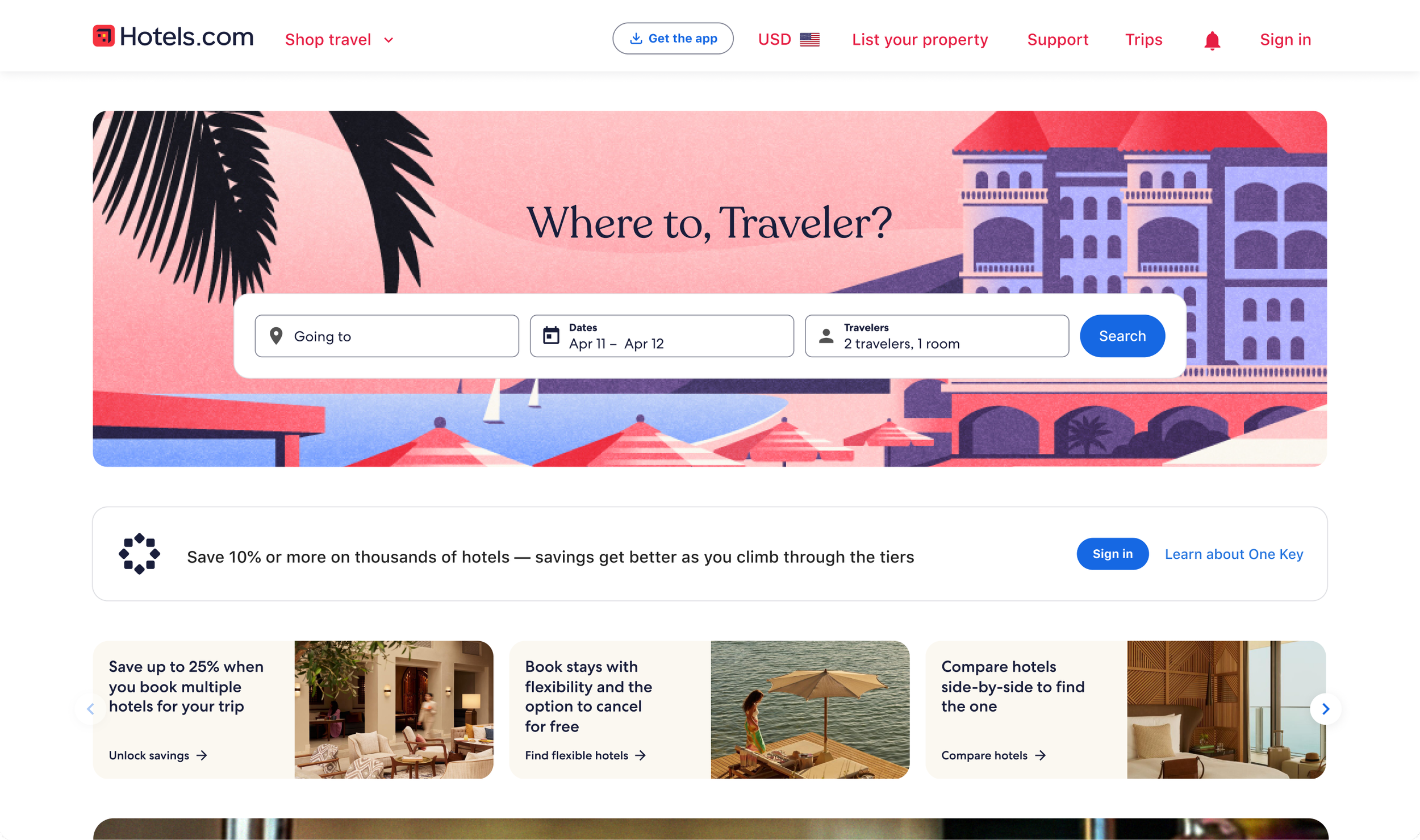
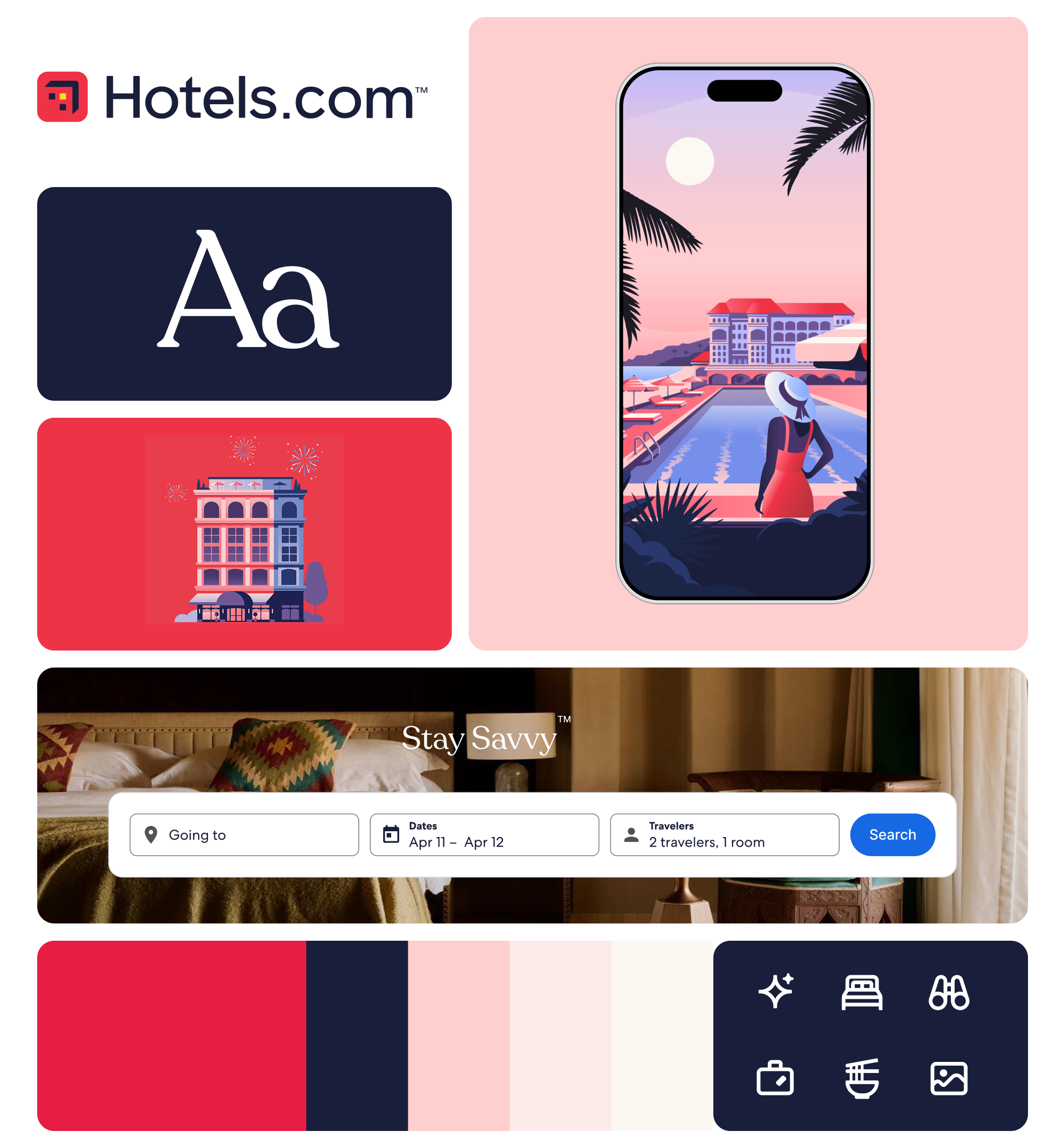
Brand integration and visual identity rollout
I partnered with the brand design and design system teams to bring updated visual identity work into the homepage experience, with Homepage acting as an early adopter. This meant aligning the product experience with wider brand and marketing campaigns so customers saw a more cohesive experience across channels.
This included:
✓ Updated core logo
✓ Branded headline font
✓ Secondary colour palette
✓ Flagship iconography
✓ Home photography & illustration
✓ Bellboy (New mascot) campaign prominence.
✓ Animated app splash screen
✓ Increased padding between cards
✓ Animated app splash screen
Summary
From February 2023 to May 2025, I led the redesign of the homepage experience across Expedia, Hotels.com and Vrbo across both web and app. The homepage was one of the most commercially important parts of the customer experience: a high-traffic entry point where travellers discovered options, resumed planning and moved toward booking.
Scope and scale
By the later part of my time on the team, the homepage footprint I was working across was approximately:
Expedia: 6.5 million web visits and 12 million app visits
Hotels.com: 3.5 million web visits and 3 million app visits
Vrbo: 3 million web visits and 4.5 million app visits
That represented roughly 32.5 million homepage visits across the three brands, with more traffic coming through the app than the web.
Where we started
When we established the homepage team in 2023, the Homepage was already a major driver of acquisition and repeat engagement.
More than half of the new customer acquisition on the web came through the homepage.
About two-thirds of homepage visits came from people going straight to the brand’s site or app, not through paid or search channels.
For Expedia and Hotels.com, direct or brand traffic was the largest source of homepage entries, with SEO, SEM, and email playing supporting roles depending on the platform.
Web traffic was more evenly split between new and returning users, while app traffic skewed much more heavily toward returning users.
How the homepage evolved
My team evolved the Homepage from a relatively static landing page into a more personalised, trip-aware experience. It did more than start a generic search: it helped people discover products, pick up where they left off, and move more quickly into planning and booking.
Impact
This work combined customer experience, content strategy and commercial performance.
Home Personalisation delivered $12 million in late 2023 and $ 21 million+ in 2024 in annualised gross profit from launched tests and improvements.
Engagement with homepage modules increased by 25% on the app and 7x on the web.
Warm-start improvements roughly doubled dated shopping progression from Home on the Expedia app.
All three brands met or beat their 2025 bounce-rate targets.
What came next
I transitioned from Homepage experiences to evolving loyalty and membership for Expedia, Hotels.com and Vrbo.
My time leading design on Home ended as part of a wider reorganisation, after we substantially transformed the Homepage's capabilities, proved its value to the business, and developed a clearer understanding of what genuinely resonates with travellers on the homepage. Having established the strategic foundations, expanded the feature set, and shown how Home could support conversion, continuation, and brand expression across brands, leadership evolved our single cross-brand team into three dedicated homepage teams, each focused on a specific brand. At that point, with Home on a much stronger footing, I was needed elsewhere in the organisation to help evolve and transform Loyalty.


Testimonials
Working with Carl on Homepage experiences at Expedia.