I worked on this idea as part of a vibe coding jam: a fast, solo, time-boxed exercise to see how far I could push AI-assisted prototyping in a short space of time.
That context matters. This was not a polished end-to-end product proposal. It was a deliberately lean piece of exploration. I chose to go broad rather than deep so I could test a product hypothesis, learn how to introduce logic into a prototype, and see how different AI tools could help me get from an idea to something tangible more quickly. The trade-off was polish. The gain was speed, range, and a much better understanding of how to use AI as part of my design process rather than as a shortcut around it.
The idea I kept coming back to was simple: family travel is constrained, not exploratory.
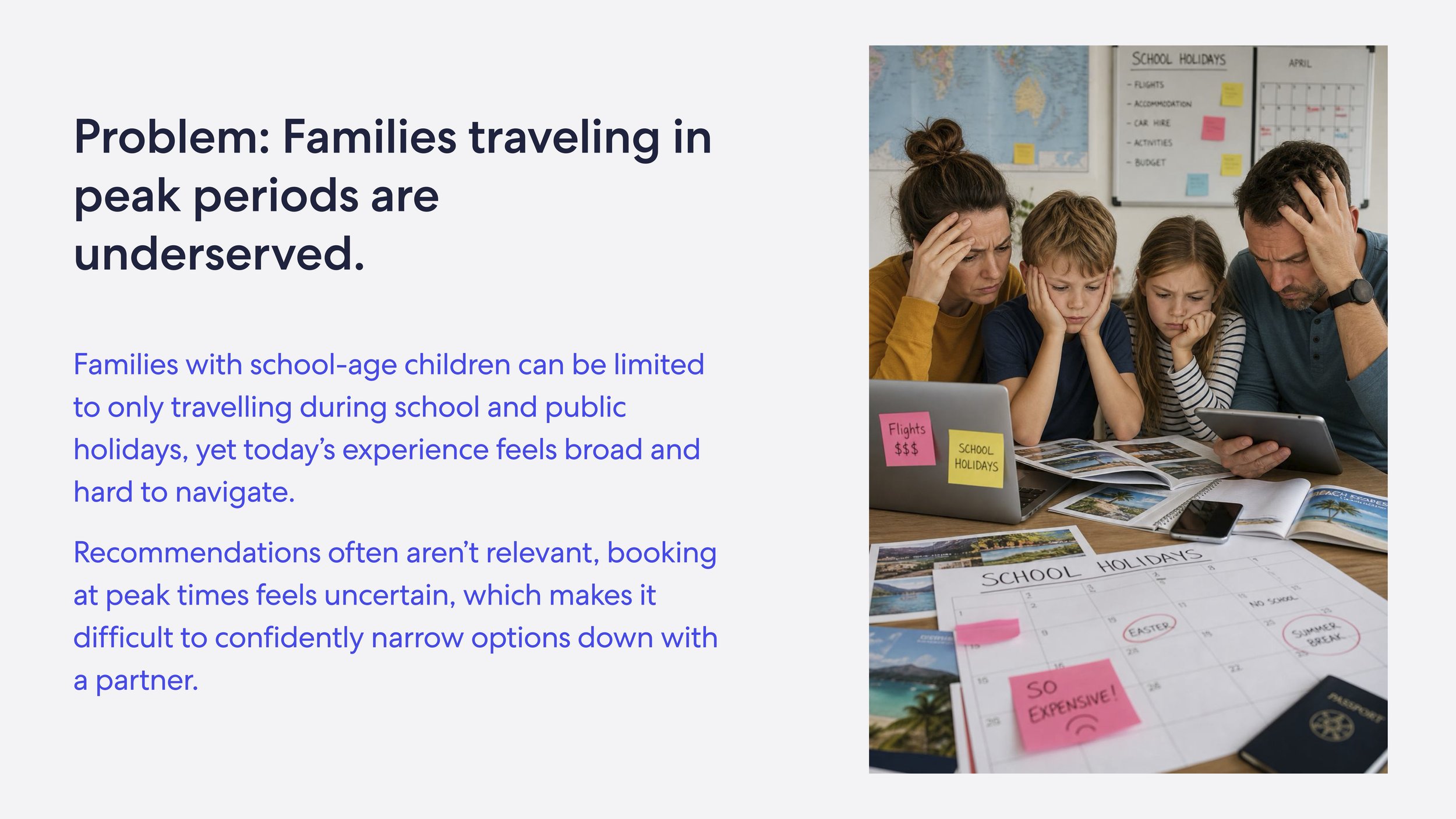
Not completely. Families still explore destinations, budgets, and trip types. But if you have school-age children, the most important part of the trip is often already fixed. You are travelling in school holidays, public holidays, or other peak periods. That changes the shape of the problem.
The question is usually not “where could we go?” It is “what actually works for the dates we can travel, and when should we book it?”
That feels like a materially different design problem from the one most travel products are set up to solve.
Why I think this matters
The evidence is strong that family travellers behave differently from more flexible leisure travellers.
In Expedia Group research, families represent a smaller share of bookings but a larger share of value, with higher repeat behaviour than non-family travellers. They are also more likely to use reviews and filters to reduce risk and validate whether a place will actually work for their trip.
That makes sense. Family travel is higher stakes. If you get it wrong, you are not just disappointing yourself. You are dealing with children, sleeping arrangements, transport time, meal routines, budget pressure, and another adult who probably has a view as well.
That is why I think the opportunity is so interesting. Families do not just need more choice. They need more help turning a constrained travel reality into a confident decision.
The pain points are pretty clear
The family planning journey has a few recurring frictions.
First, there is simply too much noise. Too many options, too much generic ranking, and too much work for the traveller to do themselves to narrow to something viable.
Second, fit is hard to judge. Families care a lot about details like room layout, beds, practical amenities, and whether a place will actually suit travelling with children. In the research I reviewed, 80% of family travellers said filtering for family-friendly amenities is very important, and 67% abandoned when they could not quickly understand room configuration or sleeping arrangements.
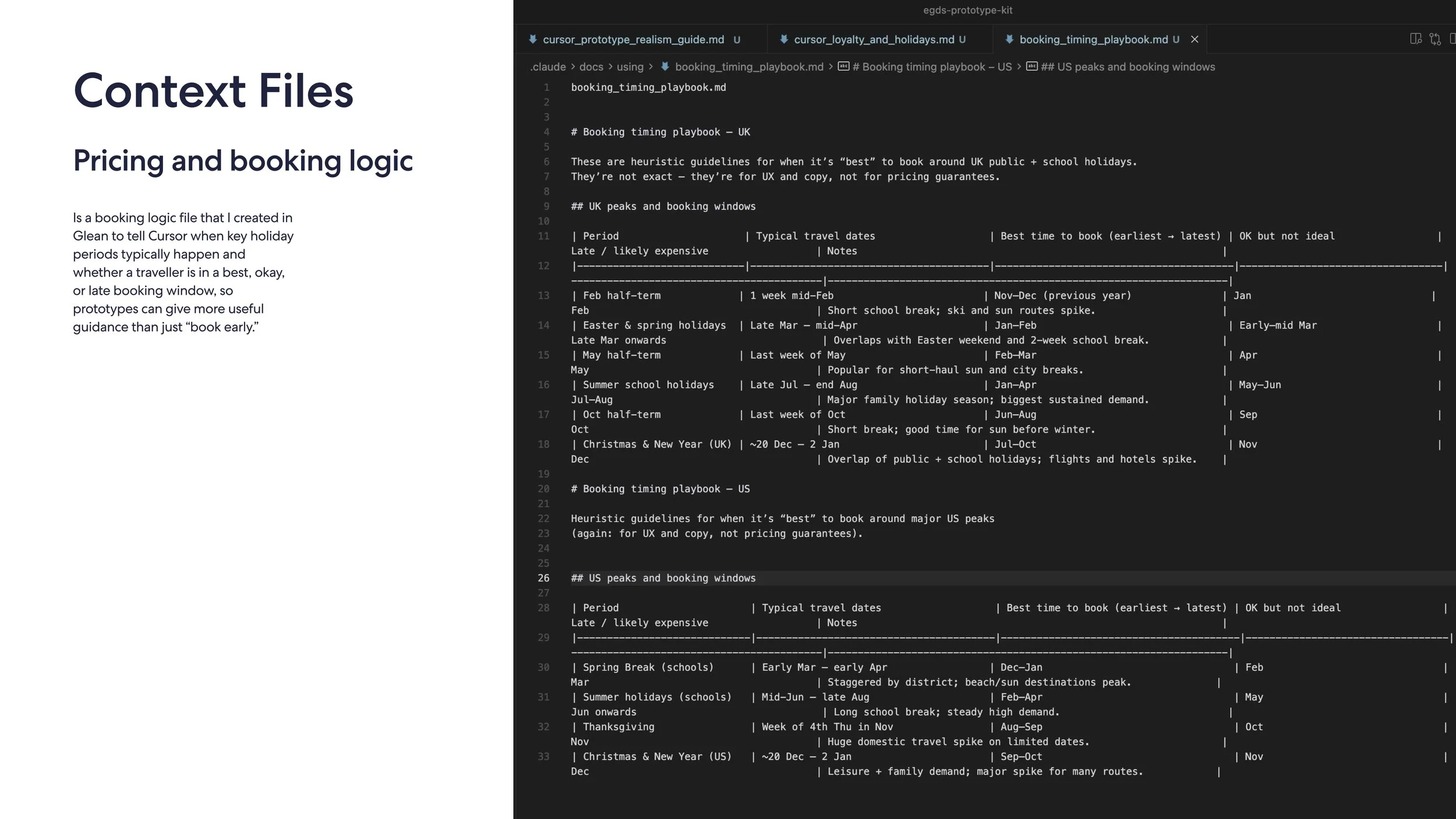
Third, pricing creates anxiety. Not just because family travel is expensive, but because peak travel is expensive in ways that are hard to read. If you can only travel in school holidays, generic “book early” advice is not enough. You want to know whether you are in a sensible booking window for the dates you actually need.
And finally, the decision is rarely individual. Family travel often has a built-in co-decider. Even if one person does the planning, the shortlist still needs to be compared, discussed, and shared.
That combination of fixed timing, higher stakes, and shared decision-making is what makes family travel feel different.
The product hypothesis
My hypothesis is that travel products should do less open-ended browsing for families and more constraint-aware planning.
If a signed-in product knows, or can reasonably infer, that someone usually travels with children and tends to travel in peak periods, it should stop behaving as though every date is equally likely. It should work harder to narrow to what is actually relevant.
That could mean starting from school holidays and public holidays instead of an unrestricted date picker. It could mean surfacing options that already match likely trip lengths. It could mean giving booking advice in the context of the actual travel window. And it could mean bringing forward the details families care about most: amenities, sleeping arrangements, travel time, and the ability to build a shortlist that is easy to compare and share.
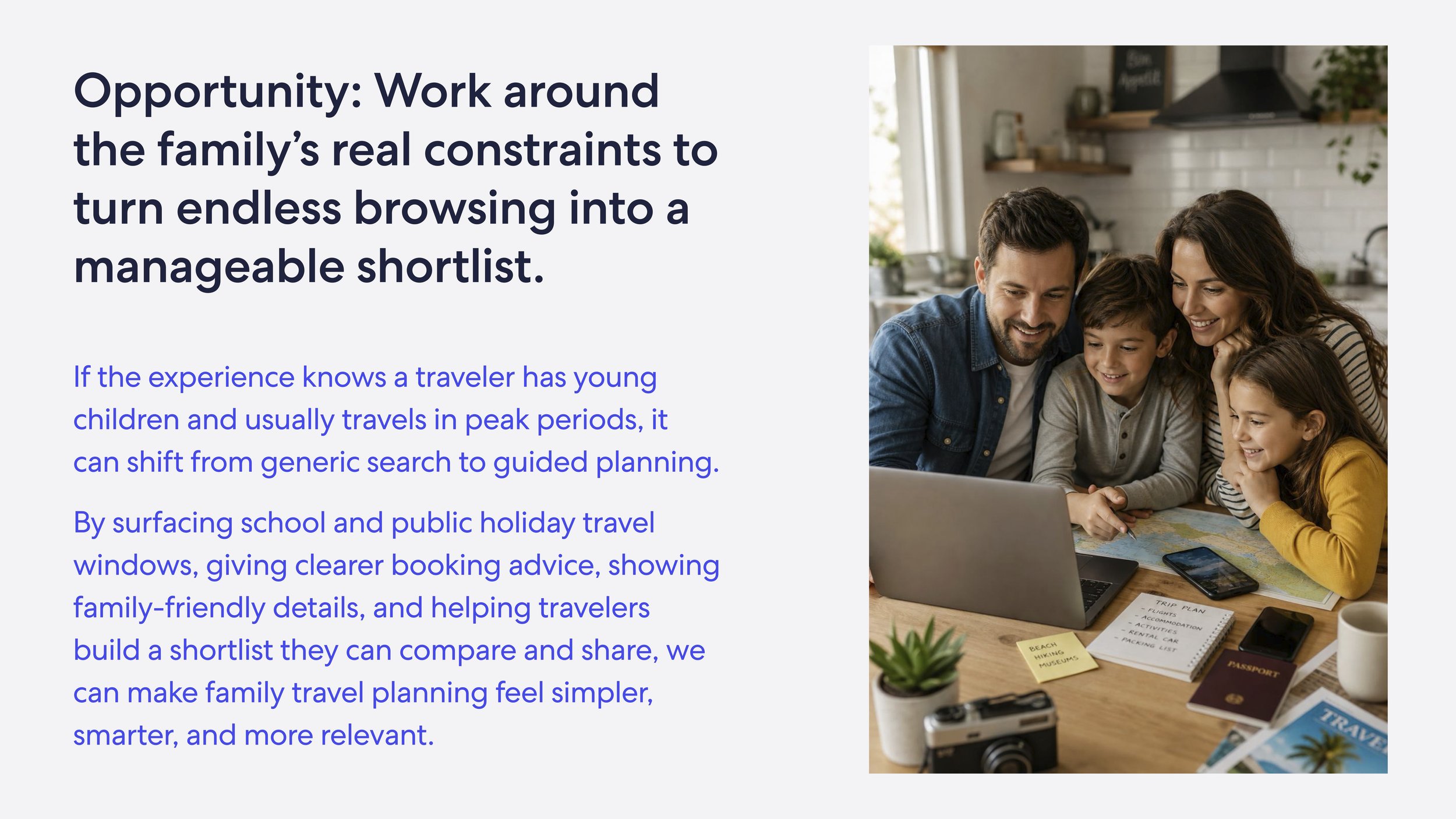
For me, the key shift is this: work around the family’s real constraints to move from endless browsing to a manageable shortlist.
What I prototyped
I explored that idea through a Hotels.com UK prototype.
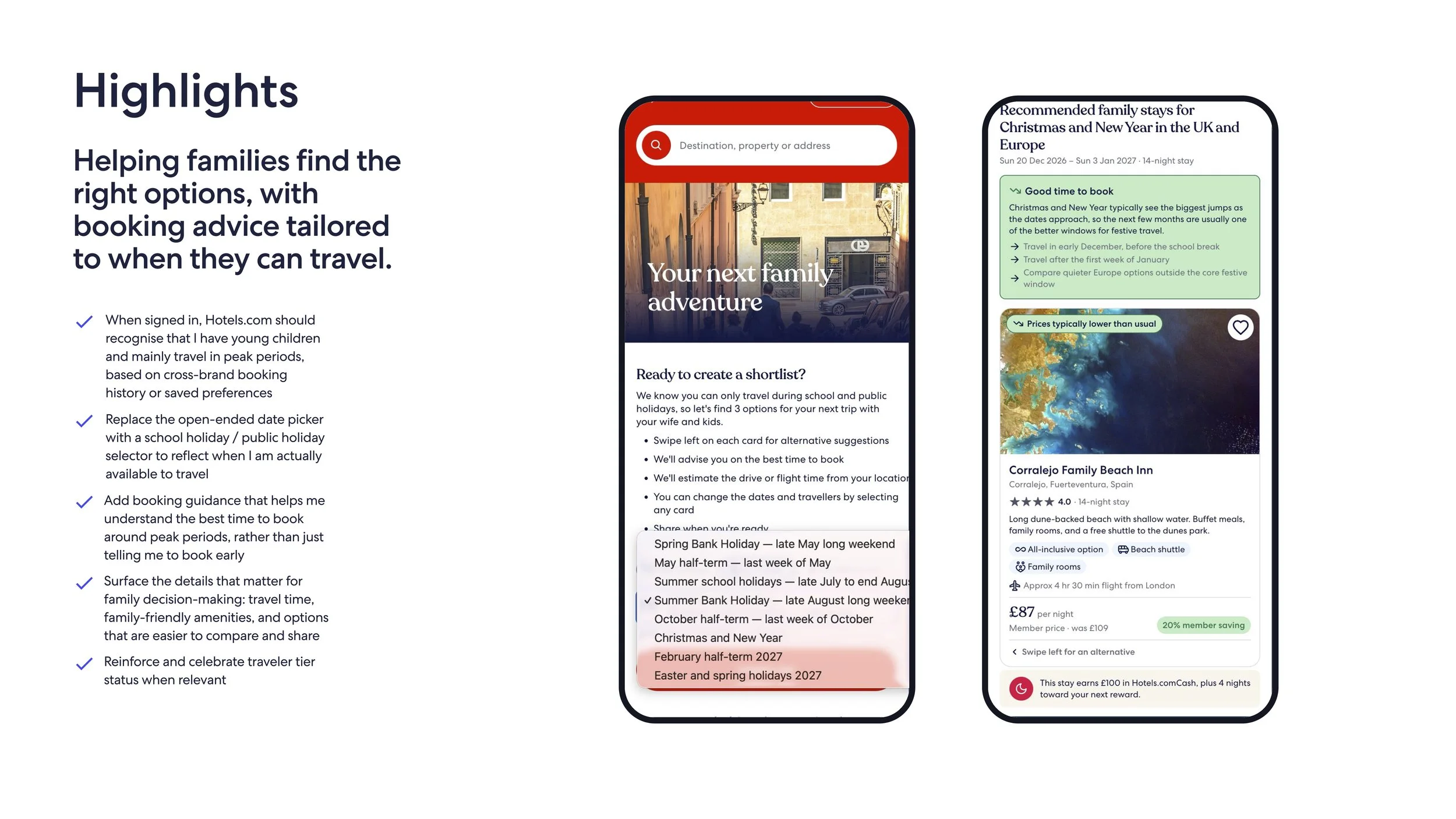
The concept assumed a signed-in traveller with young children and a history of travelling in peak periods. From there, I reframed the home experience around the moments that matter most for family planning.
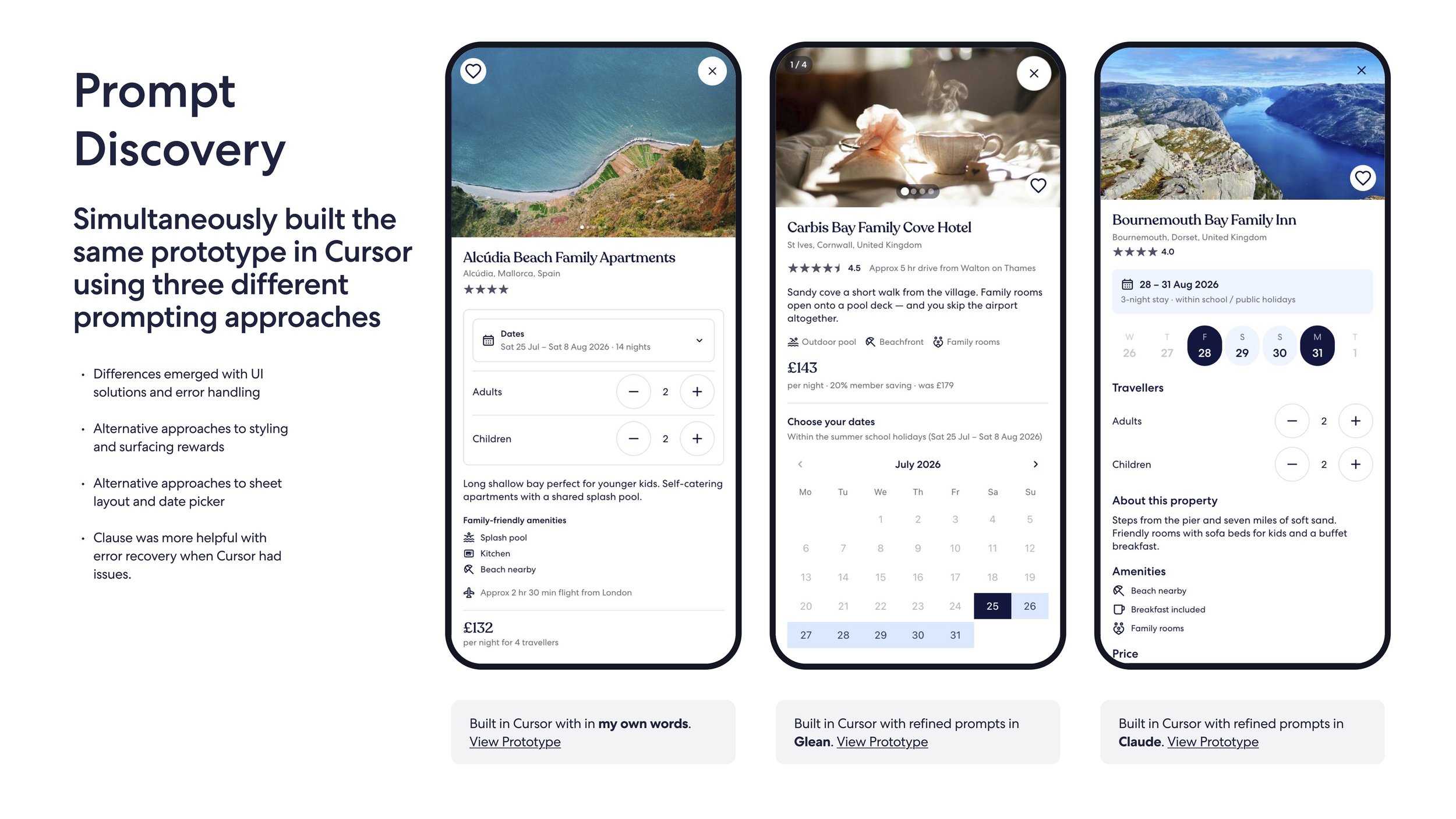
Instead of starting with a broad date search, the experience allowed the traveller to choose from school holiday and public holiday windows. It then surfaced family-friendly options in the UK and Europe, added guidance about whether now was a good time to book for that window, and made it easier to refine options into a small shortlist.
The interaction model was intentionally light. Swipe through alternatives. See family-relevant details earlier. Understand whether prices are likely to rise. Compare a few viable options rather than endlessly scanning a long list.
It was not meant to be the final answer. It was meant to test whether the journey felt more useful when the product started from real family constraints instead of generic travel discovery.
The process was as important as the prototype
One of the most useful parts of the jam was not just the prototype itself. It was the way I built it.
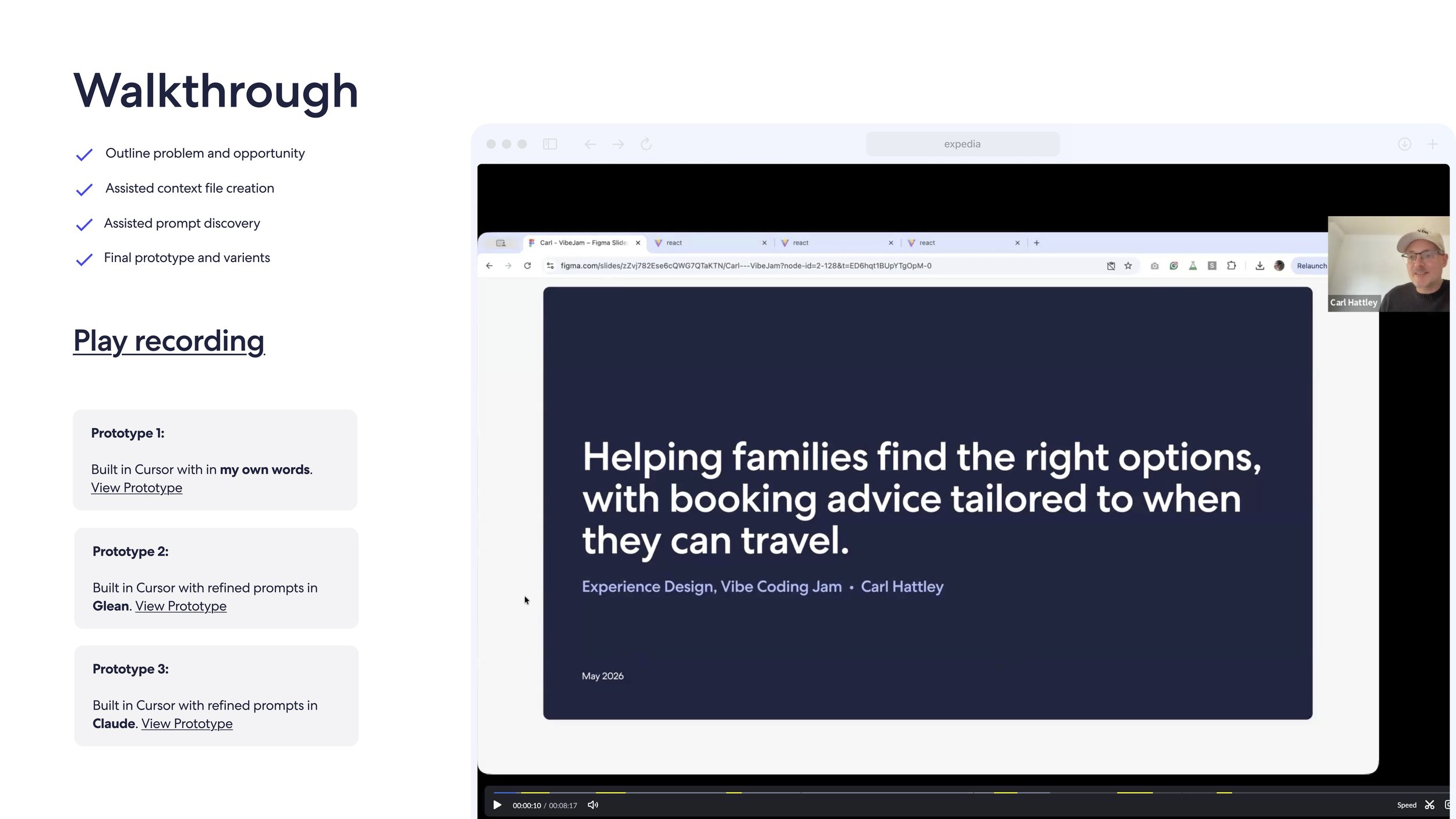
I worked on it alone, quickly, and iteratively. I built the same core concept in Cursor using three prompting approaches: my original prompt, a version refined with Glean, and a version refined with Claude. That gave me a useful comparison between instinct, grounded context, and prompt refinement.
What became obvious quite quickly was that better outputs did not come from asking for “better UI.” They came from giving the model better context.
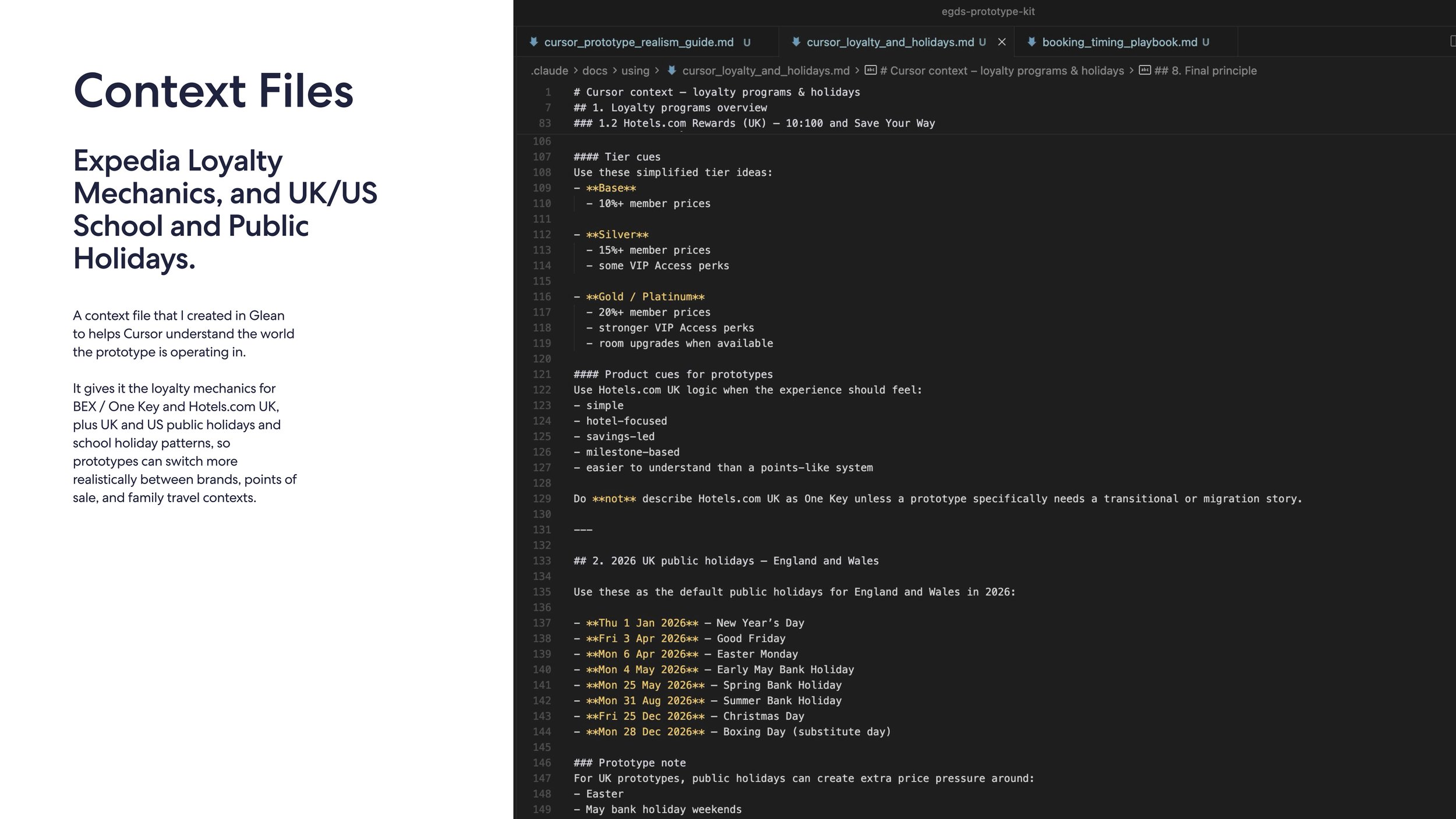
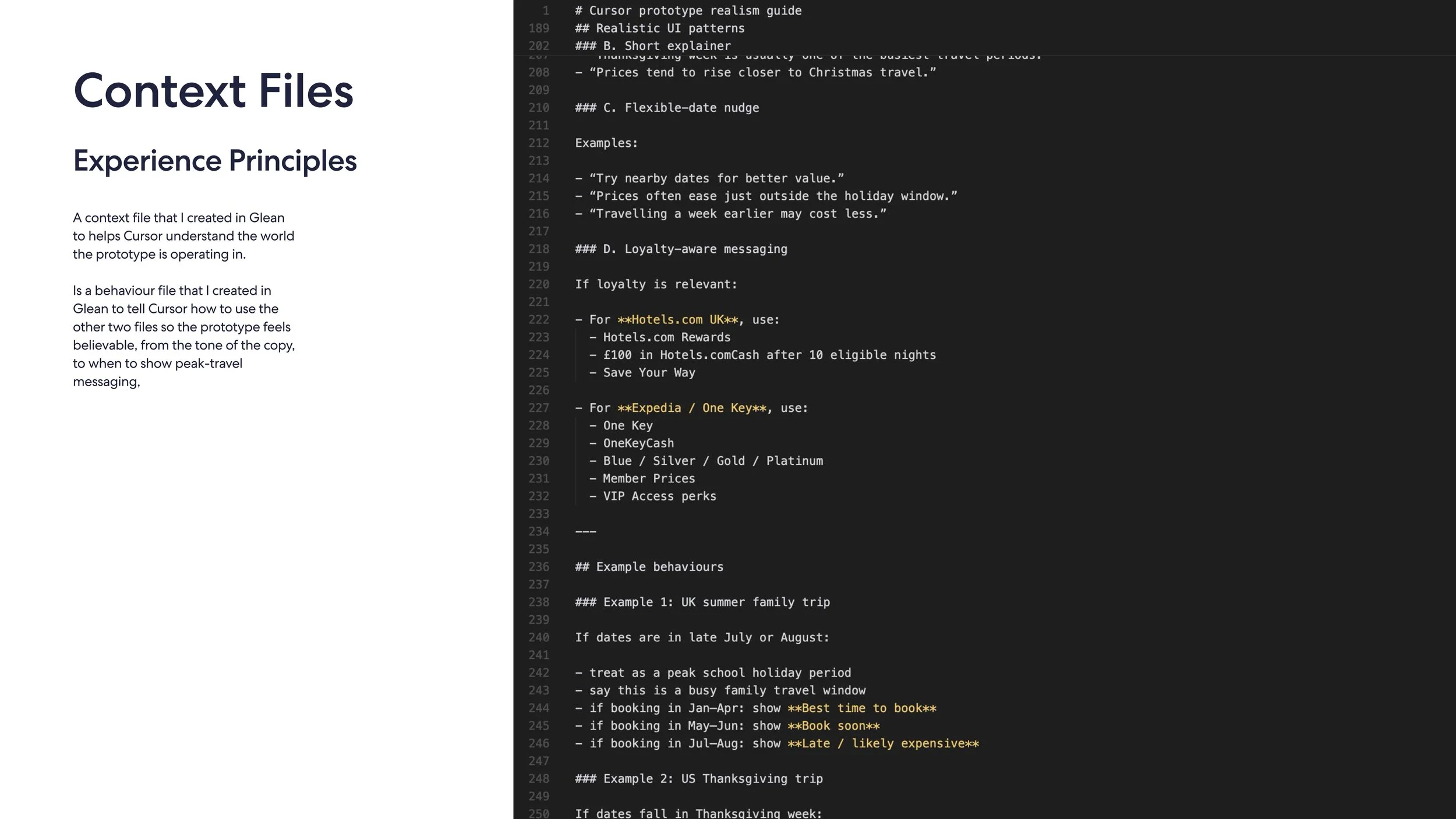
So I created a small system of supporting files to make the prototype feel more real. One file captured loyalty and holiday context, including differences between brand mechanics and UK and US holiday patterns. Another defined booking windows for key holiday periods. A third told Cursor how to behave more credibly: what tone to use, when to show peak-travel guidance, and how to avoid overclaiming.
That was the breakthrough for me.
A lot of AI-assisted design still sits at the level of “generate a screen.” What felt more interesting here was context engineering: giving the model structured inputs, behavioural constraints, and enough product logic to produce something more believable.
The tools ended up playing different roles in that process. Cursor was the execution layer. Glean helped ground the work in real product and traveller context. Claude helped tighten and improve the prompts so the output became more coherent. Used together, they felt less like separate tools and more like a lightweight workflow.
What I learned
The biggest lesson was not that AI makes prototyping faster. It does, but that is the least interesting part.
The more useful lesson is that AI becomes much more valuable when it is working against a better model of the problem.
In this case, the problem was not “how do we inspire families with more travel ideas?” It was “how do we help families make a confident decision when their timing is already constrained?”
That is a much sharper product question.
It also leads to a better design principle: do not make families do all the work of translating fixed travel reality into a viable shortlist. Help them get there faster, with better guidance and less noise.
That is the opportunity I wanted to explore in this jam. Not a finished solution, but a stronger direction: one where family travel planning feels less like generic browsing and more like practical decision support.
Concept Summary
Family travel is not just leisure travel with a few extra filters. It is a constraint-led planning problem. Families with school-age children often travel in fixed school and public holiday windows, face higher pressure around fit, timing, and price, and need more help validating whether an option will actually work. The opportunity is not to show them more options. It is to design around their real constraints and help them move from noise to a confident shortlist.
---
Senior Manager, User Experience Design at Expedia Group.
