Visual Search

Overview
Visual Search was becoming more prominent as a way to shop with competitors as well as a new opportunity for growth.
I explored this new possibility to understand whether it could be a more convenient way for customers to search.
I planned and designed an appetite test with product owners to understand customer behaviours, focusing on image source and search results to inform further complexity.
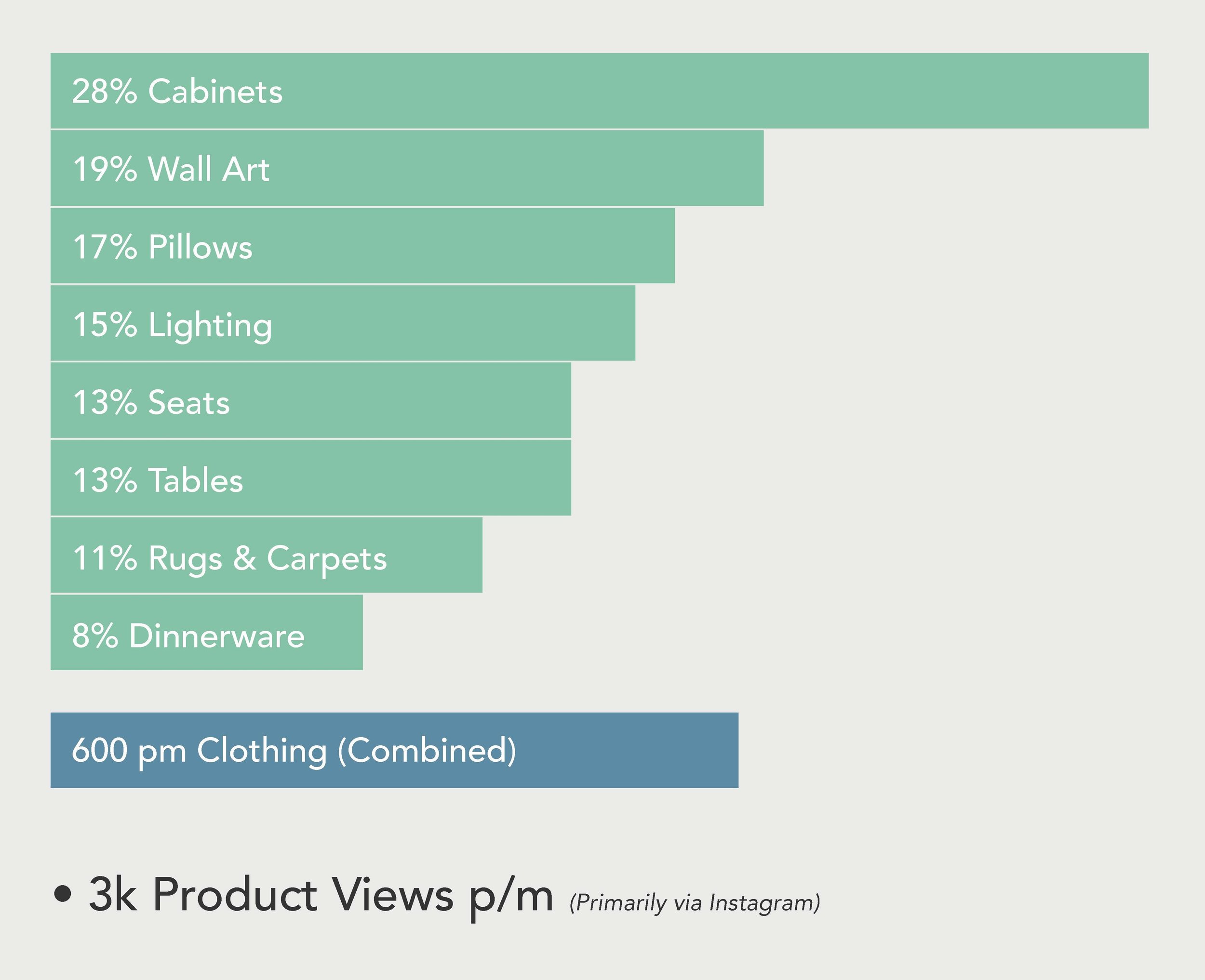
This resulted in 3.5k searches p/m and showed how technology could work best for Argos while enabling iterative builds around an emerging behaviour.
Opportunity:
40% of consumers take pictures of products they find in showrooms to check prices online later. (Comscore).
The way online shoppers look for products is changing - 62% of Gen Z and Millennial Consumers Want Visual Search Capabilities More Than Any Other New Technology (ViSenze)
Why “Visual Search”
40% of consumers take pictures of products they find in showrooms to check prices online later. (Comscore).
The way online shoppers look for products is changing - 62% of Gen Z and Millennial Consumers Want Visual Search Capabilities More Than Any Other New Technology (ViSenze)
Applications:
Point and shoot! A more convenient way to search
Text entry, menu browsing, voice instructions
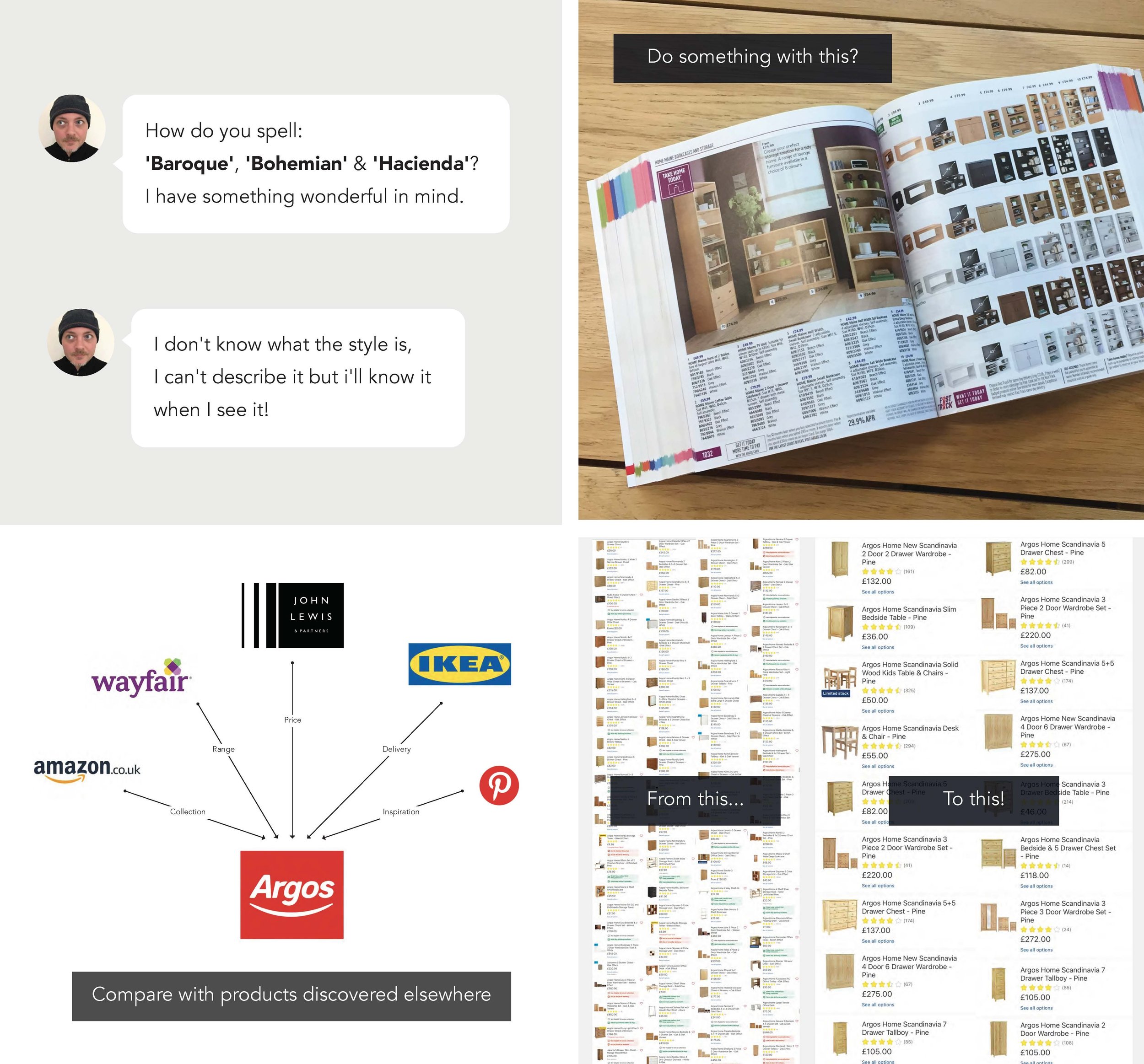
Difficult to describe what they are looking for
The unusual style of a table or 'what goes with this?' queries
Search for multiple items at once
Lifestyle photograph of a living room
Updated prices & availability for catalogue items
When used with Argos print catalogue
Expand on Argos catalogue experience.
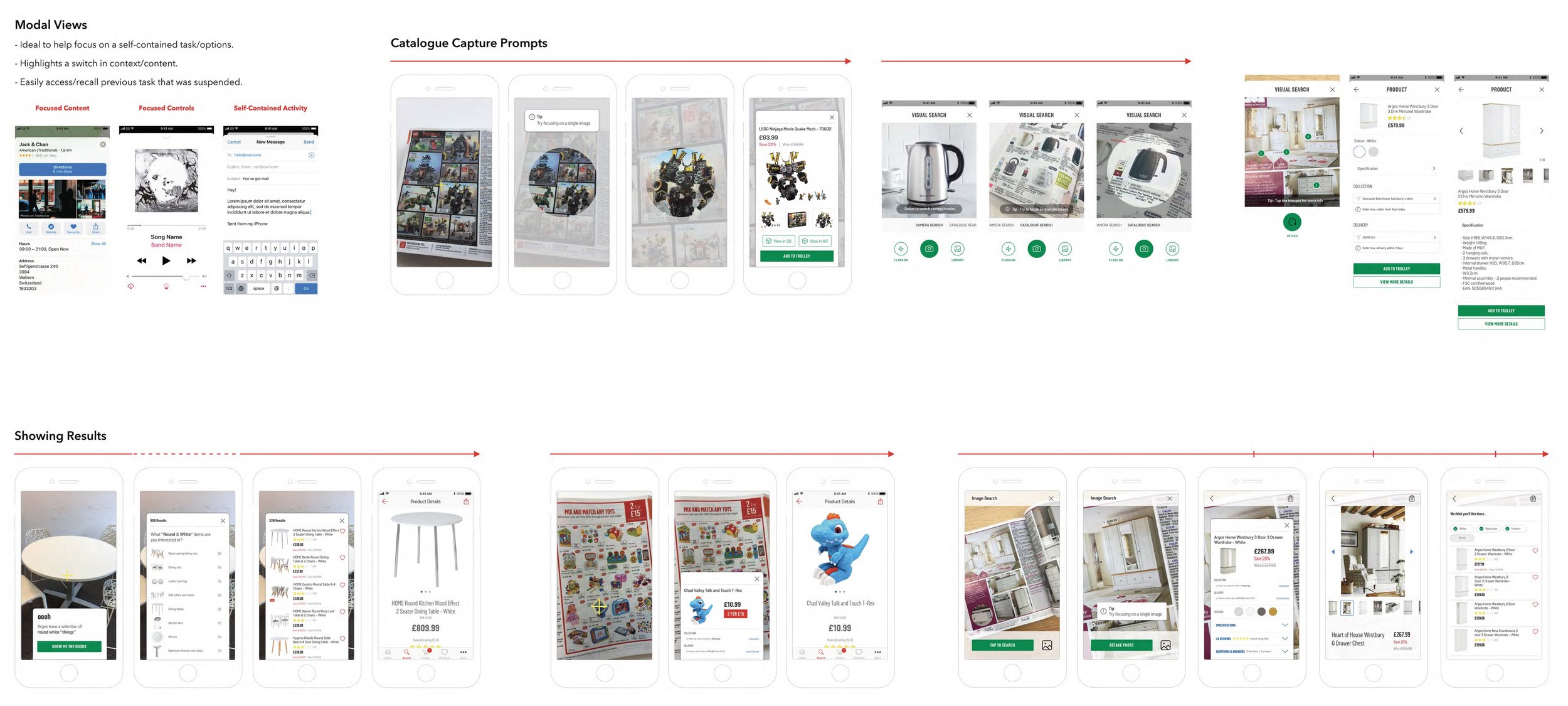
Quick-view of product images, content & specs
Quicker than navigating through numerous search result pages
When looking for a style in a wider range/categories
Potential scenarios and use cases.
Discovery
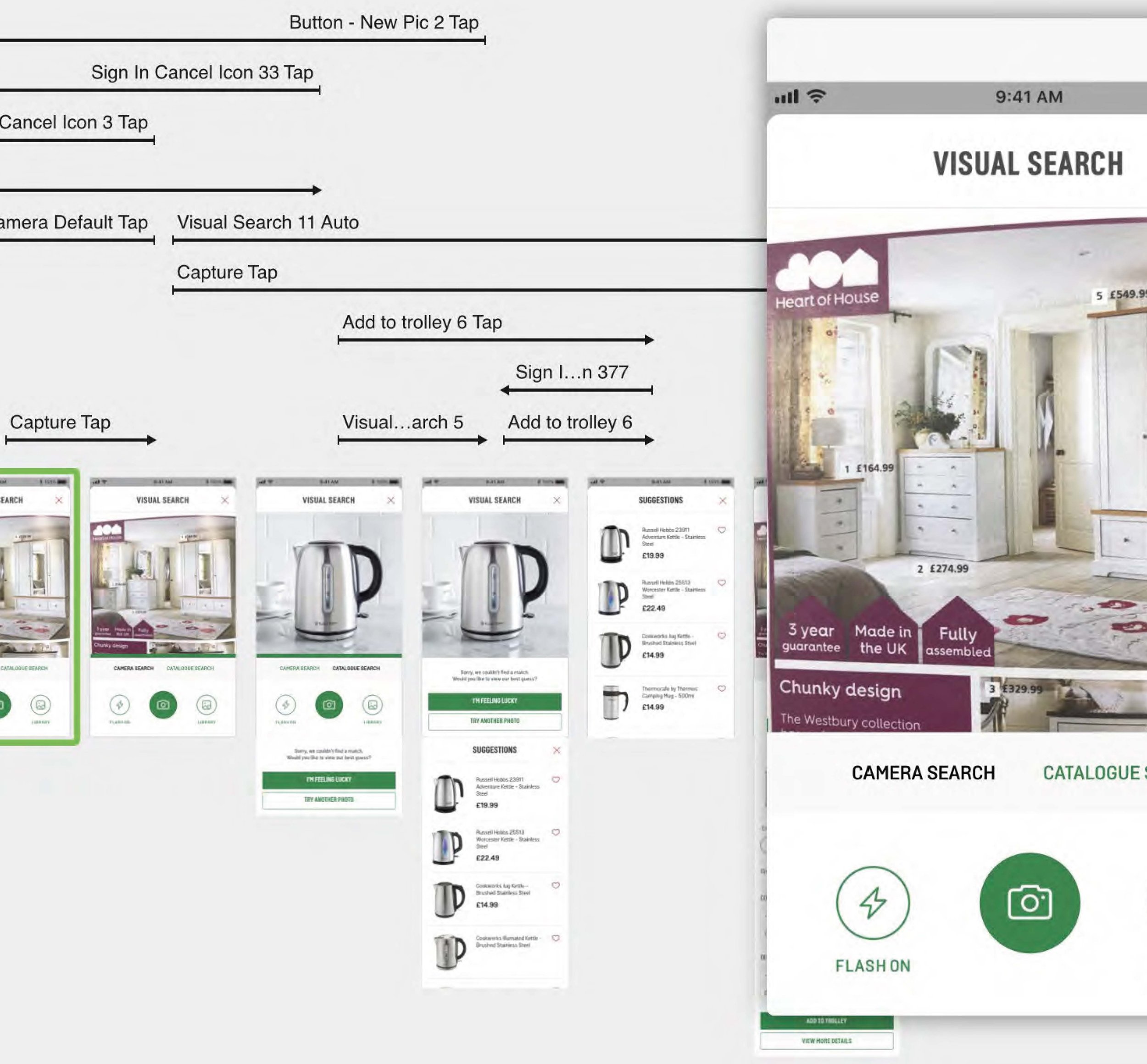
I produced prototypes in Principle to guide the developer on how the experience should take shape as he built it out in a test environment. We focused on a catalogue companion because of concerns about search-result accuracy and the breadth of our range.
Issues/Constraints with Visual Search:
Unable to store SKUs on device. We need a photo before we can surface results.
Unlikely to have an exact match. Results are more likely to be general listings.
Unlikely to recognise catalogue images with the same accuracy as actual objects.
Unlikely to have the range or stock depth to meet customer expectations.
Insights Lab & In-Store Usability Sessions:
The entry point under the search field wasn’t noticed.
Novelty faded dramatically when results didn’t meet expectations.
Disappointed with Catalogue when the results didn’t match the catalogue.
Initially, it didn’t seem quicker than typing it out or searching through a menu (until they got the hang of it)
Most participants wouldn't use the Argos App to take photos.
App users didn't use the catalogue at home ("Maybe an old one", "Maybe the wife does")
Catalogue customers didn't use the App. They primarily arrived at Argos Online via Search Engines.
Customers liked that multiple items were detected in the same image.
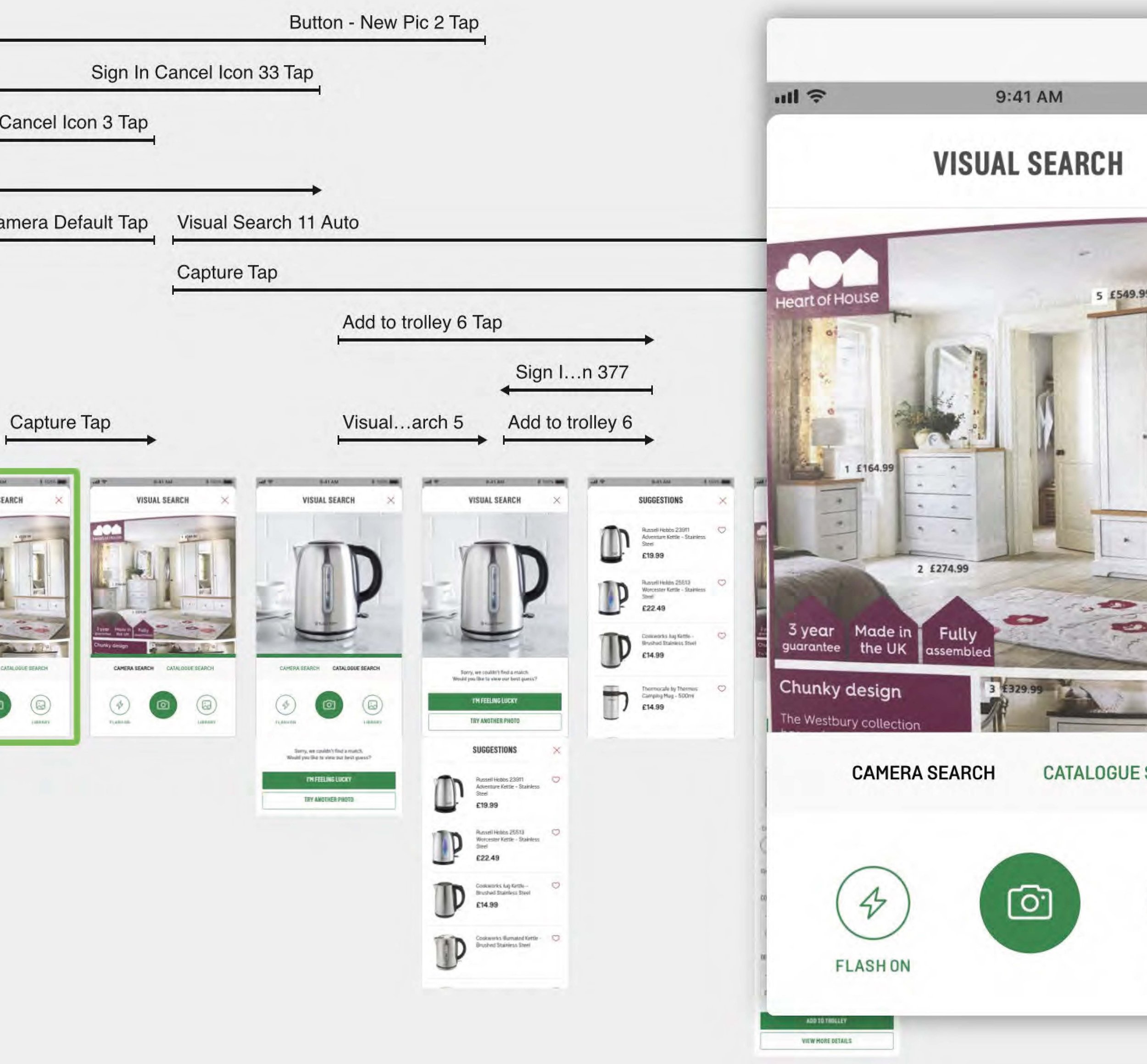
Ideation
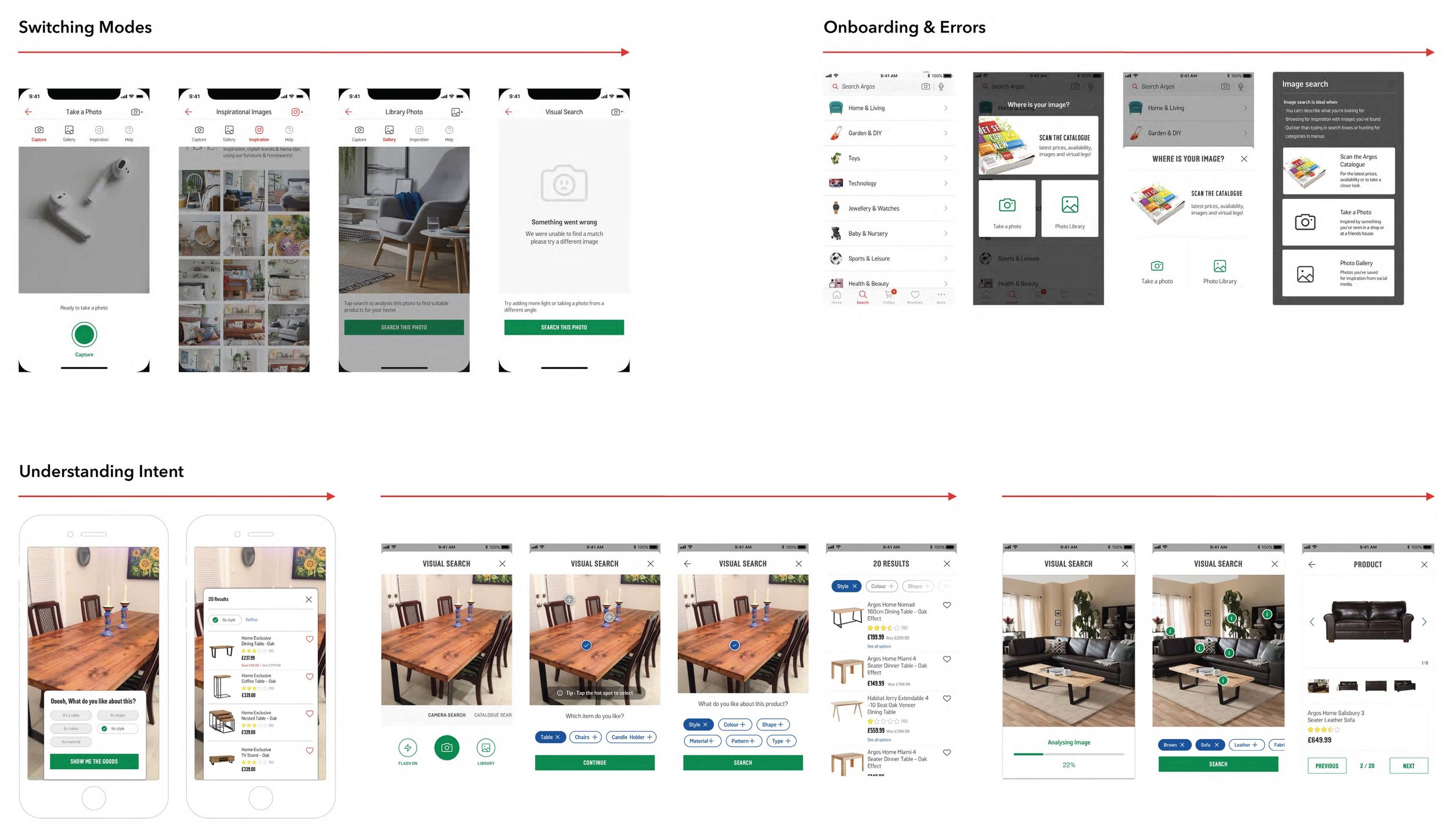
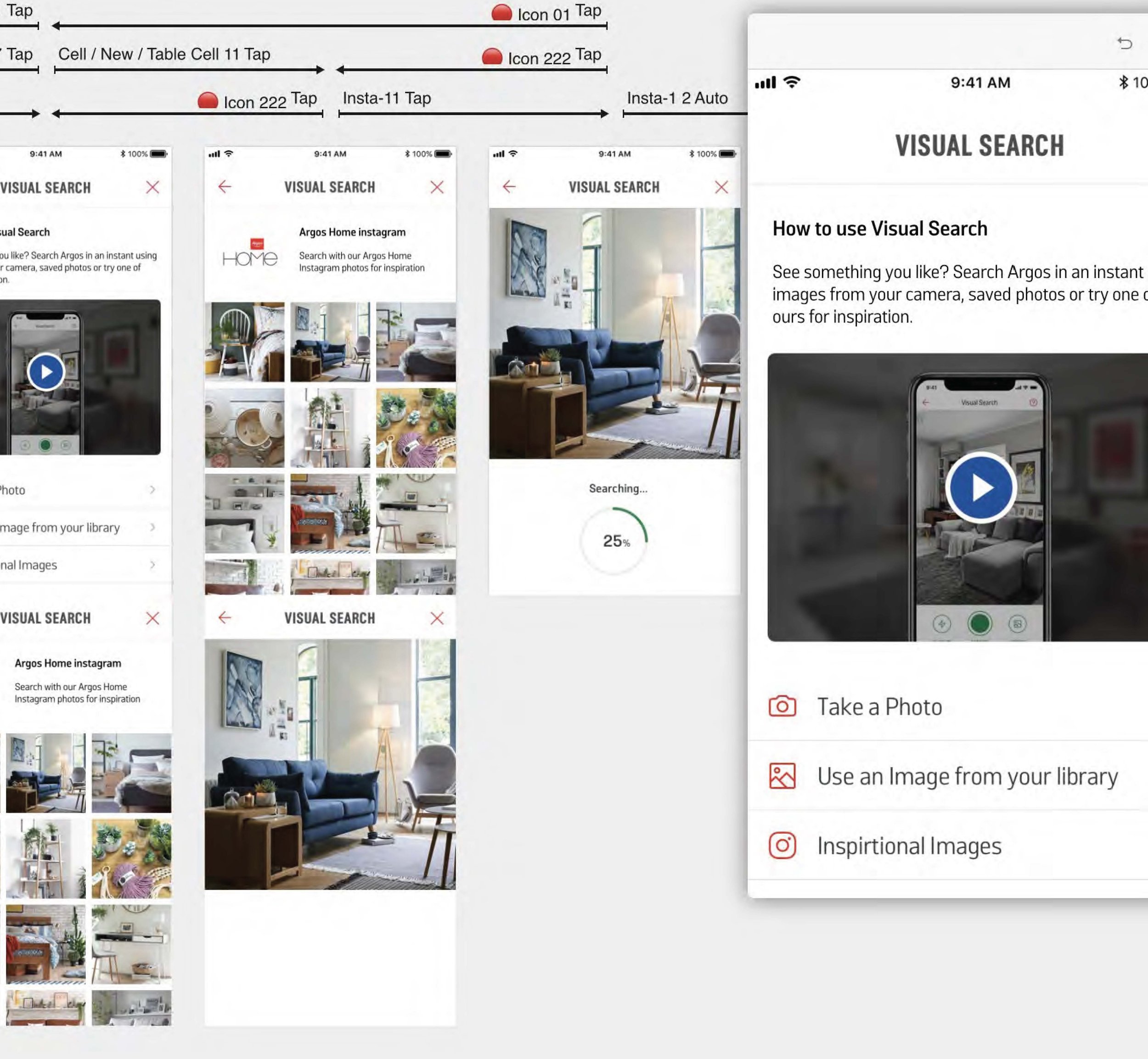
Pivot to Instagram
We decided to pivot from catalogue images to Instagram images.
Although it addressed some problems, the customer segments were too diverse.
Superusers vs. Luddites
Superusers were unlikely to use the Catalogue, and catalogue users were unlikely to use Visual Search (Lab & In-store Surveys).
The business was also looking for ways to decommission the catalogue, and this wasn't seen as a load-bearing lifeline.
What we changed:
Moved away from Catalogue Search
Identified Instagram as a way to use pre-prepared images of Argos products to generate better results.
Introduced onboarding to guide new behaviours.
Conclusion
An early adoption roller-coaster:
Motivated team with a novel opportunity to investigate.
Customer engagement was positive but lower than anticipated.
Better understanding of how technology might work best for Argos.
In a position to build on an emerging behaviour in a sustainable and scalable way.
Tips:
Do the legwork, don't give users homework!
Be relevant; target experience to likely scenarios.
Be focused, be in the right place at the right time.
Next Steps:
Explore how we might provide customers with relevant images that they can search with.
The PO and I were discussing utiliising the technology to "Find Similar" on images from Product Pages.
Prophecies may still come to pass but may require further patience and iteration.
By 2021, early adopter brands that redesign their websites to support visual and voice search will increase digital commerce revenue by 30%.
Enterprises should experiment to identify the best ways to capitalise on this consumer shift. (Gartner).