AR Showroom
Overview
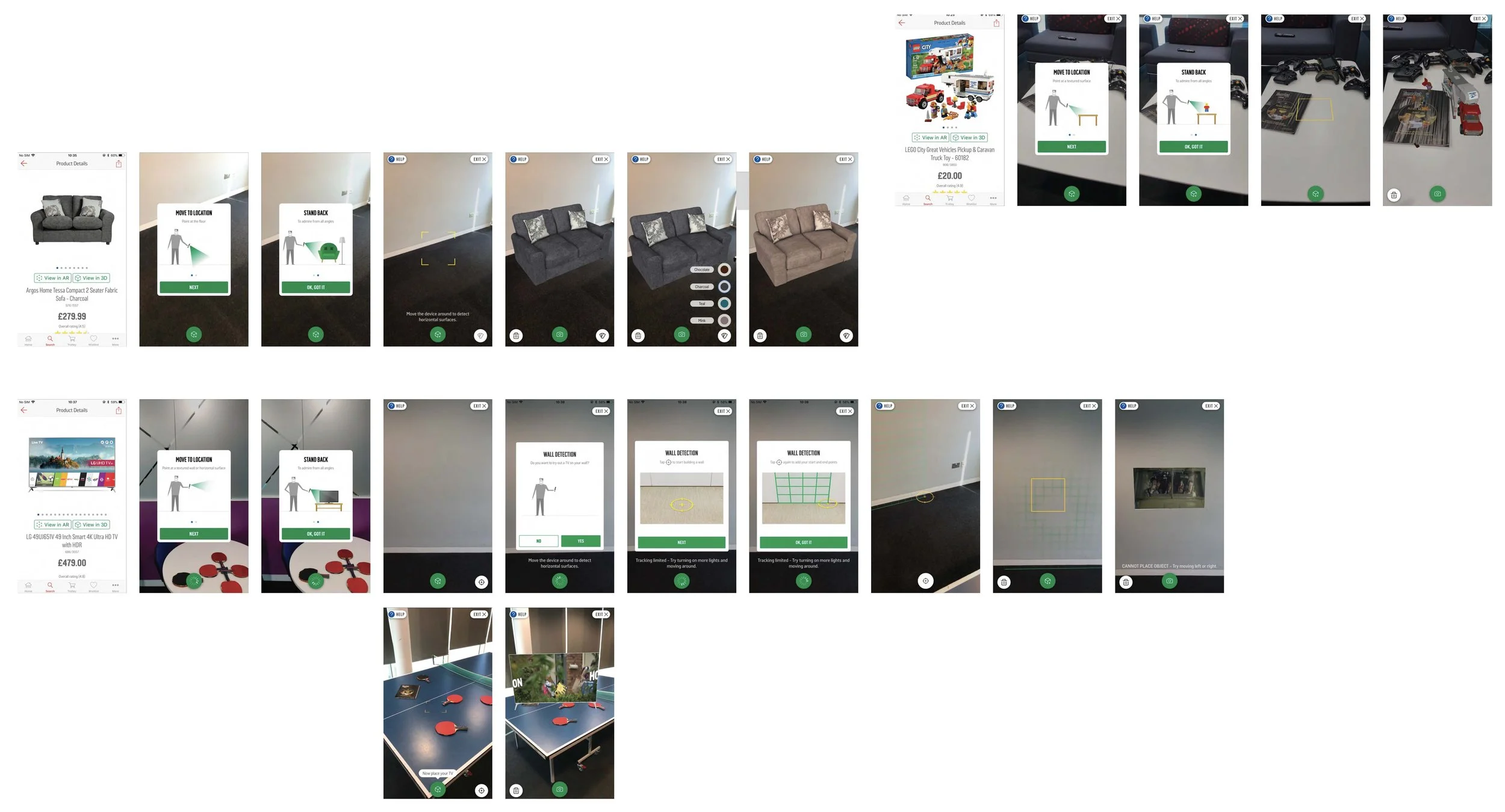
Unlike their competitors, Argos doesn’t have showrooms. We identified AR as an opportunity to close that gap and improve consumer confidence.
However, the technology was new to Argos. We iterated with customers in-store to understand and address complexities such as user context, user motion, onboarding, scanning surfaces, prompt display, error-recovery mechanics, positioning, and accuracy.
We provided customers with 100s of Argos products to view in AR, including: Lego Models (Animated), Sofas & Armchairs (Accurate Dimensions) & TVs (Standing or Wall Mounted).
18% interacted; despite low interaction (9,500), AOV is higher (£70-£200), crash rate is high, and users are 30% less likely to convert and 9% less likely to show interest (basket, wish-list). Users don't necessarily plan to buy in the same session.
Baseline the MVP experience with customers and gain insights
The PM, IOS Engineer, and I produced an ARKit MVP, which I explored with customers in the local Argos store.

Map the experience and highlight refinements.
We captured opportunities to optimise the experience and applied them in the following sprints.
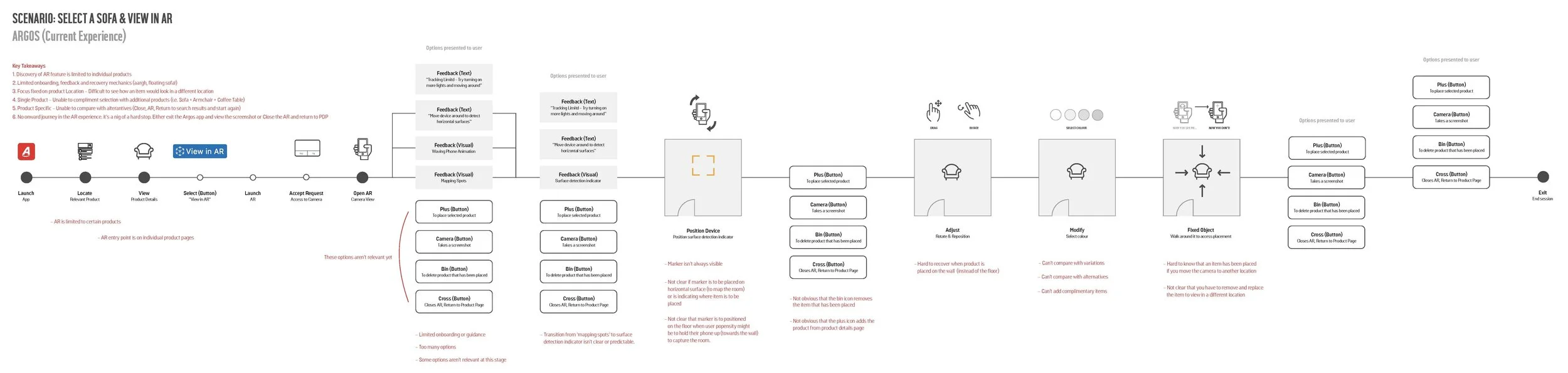
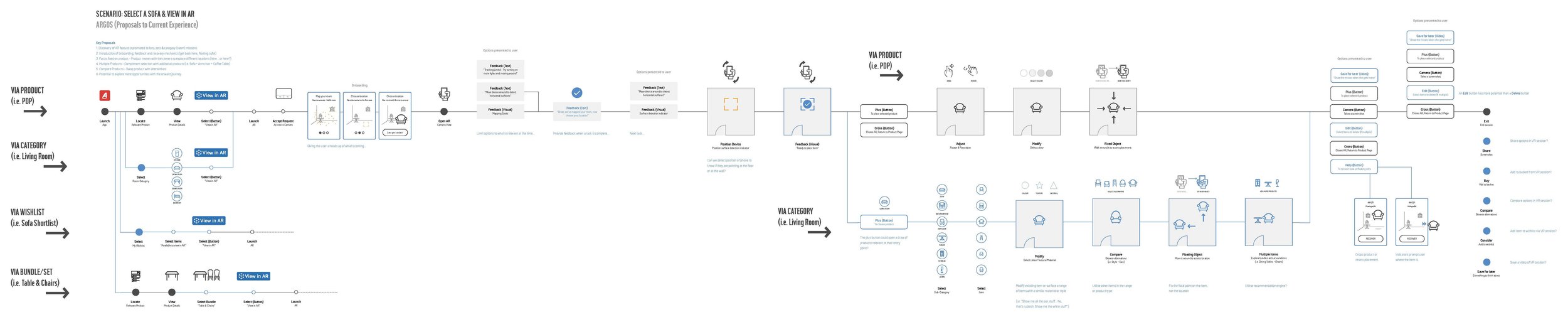
Identifying opportunities to enhance the experience.
Working with customer feedback to the MVP and business goals. The PM and I outlined opportunists to expand the experience. A mix of quick wins and long term goals.
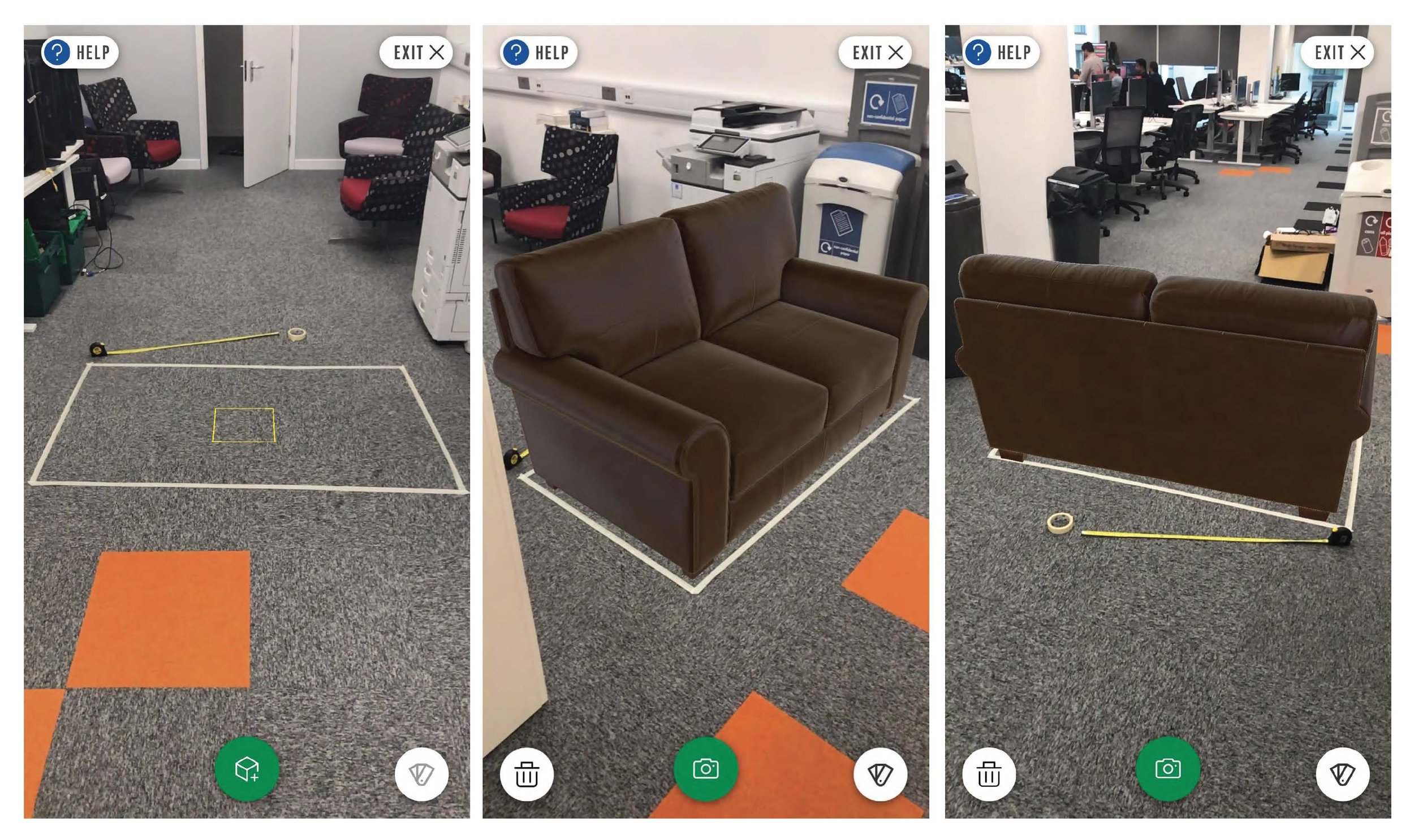
Object dimensions, accuracy and getting customers to look down!
I placed masking tape on the floor to understand the proximity requirements for an accurate object placement.
However, this meant getting customers to look down, which created other problems, such as users not wanting to move as much as required and being too close to the object to view it.
The AR experience comes with dependencies...
The Argos app provides the same shopping experience regardless of the room a user is in.
However, an AR experience can vary dramatically depending on user context: location/environment, unfamiliar expectations, and the adoption of new patterns and behaviours.
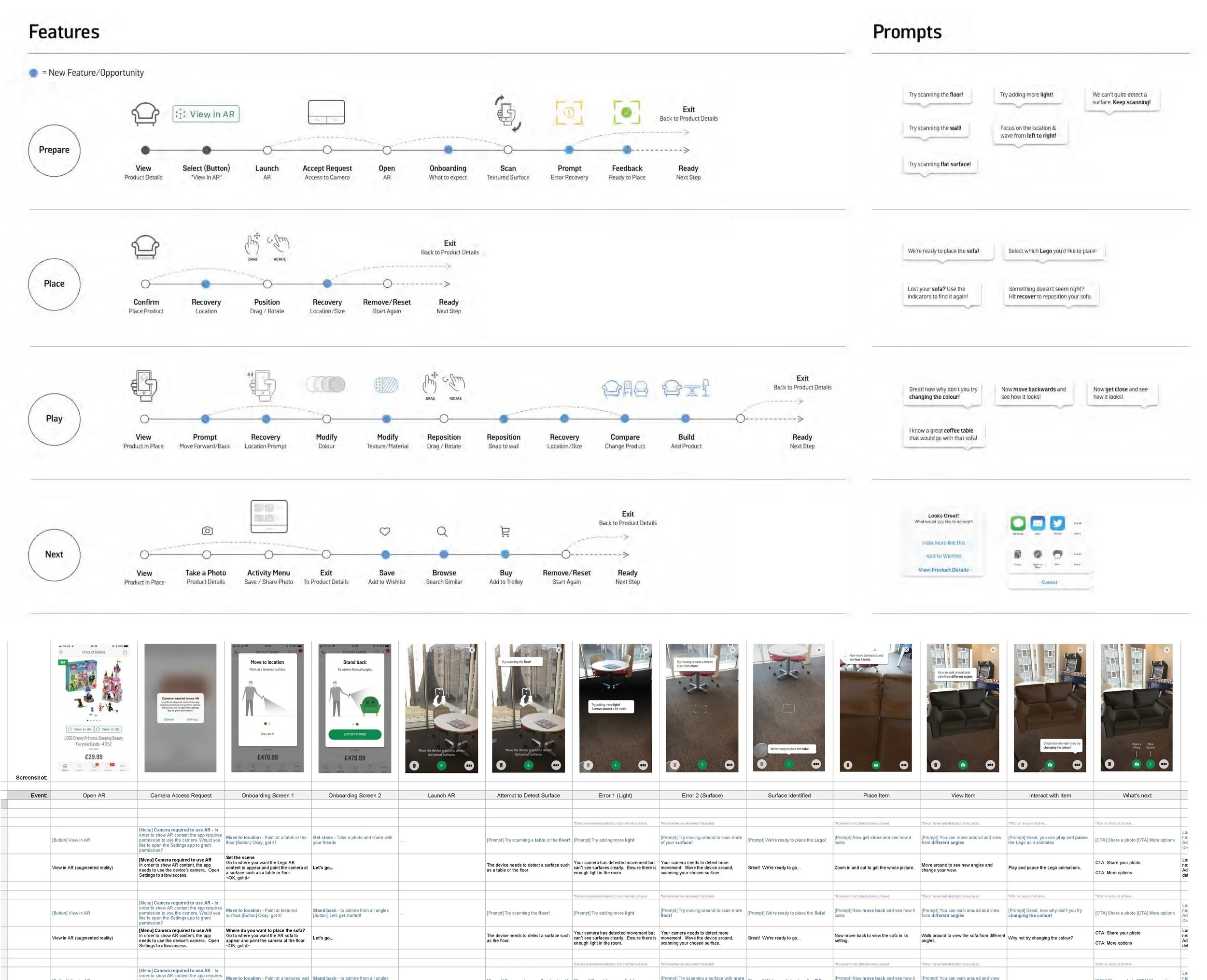
We divided the experience into stages so that we can focus and guide the user through each stage with appropriate features and prompts.
Working with our copywriter, we crafted a tone of voice and dialogue that adapted to where the user was in the experience and what we were asking them to do.
Onboarding
AR is a new concept for most of our customers. Most don’t even know what it means.
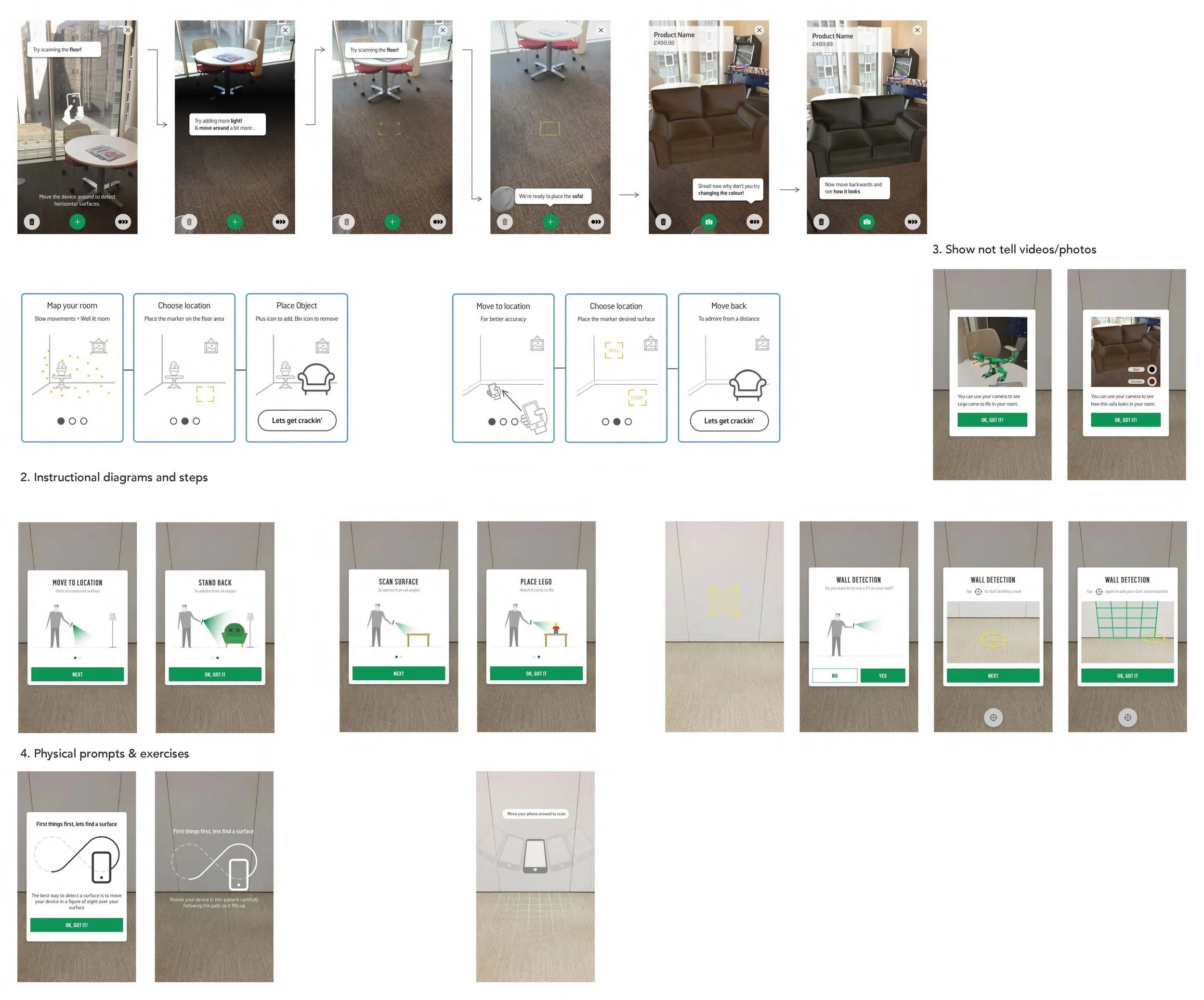
Various methods of onboarding were explored to help prepare our customers for the experience and what to expect:
Conversational tips with contextual dialogue bubbles
Instructional diagrams and steps
Show, not tell videos/photos.
Physical prompts & exercises
Although users often flicked past the onboarding, they did pick up a sense of what was to come. However, the limited tracking on plain surfaces remained a sticking point.
Summary
Using iOS ARKit, we let customers view 100s of Argos products in AR.
Including: LEGO models (Animated), Sofas & Armchairs (Accurate Dimensions) & TVs (Standing or wall-mounted).
18% interacted; despite low interaction (9,500), AOV is higher (£70-£200), the crash rate is high, and users are 30% less likely to convert and 9% less likely to show interest (basket, wish list). Users don't necessarily plan to buy in the same session.